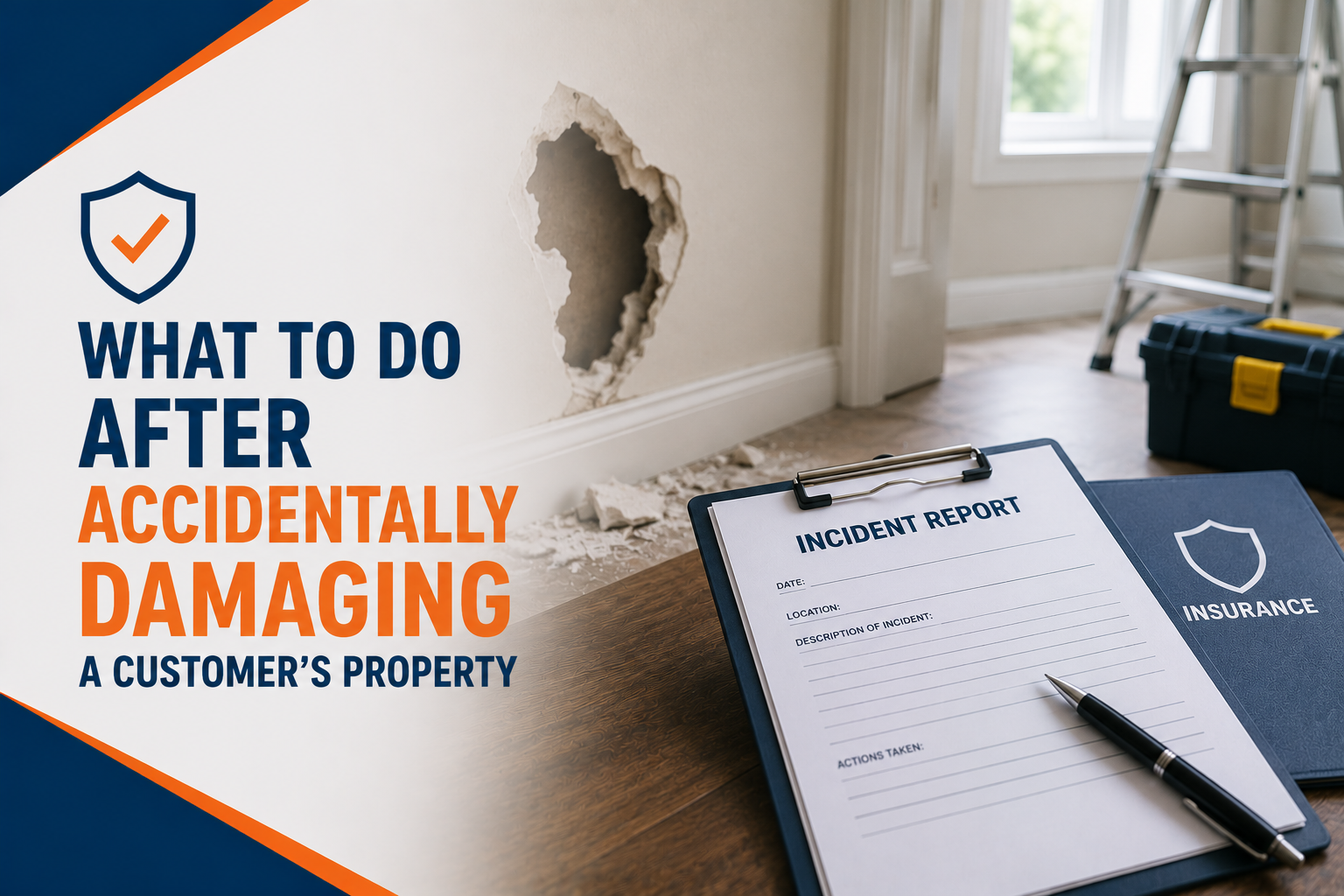
What to Do After Accidentally Damaging a Customer’s Property
If you accidentally damage a customer’s property, stop working, protect everyone from immediate danger, prevent the damage from getting worse, document what happened, and notify your insurance company promptly.
Do not hide the damage or attempt a permanent repair before the incident has been properly documented. You should communicate honestly with the customer, but avoid speculating about legal responsibility or promising a specific payment before your insurer has reviewed the claim.
Commercial general liability insurance may cover accidental property damage caused by your business operations. However, coverage depends on the policy, exclusions, deductible, damaged property, and circumstances of the incident. The Texas Department of Insurance describes commercial general liability insurance as protection against claims involving bodily injury and property damage arising from business operations.
Immediate Property-Damage Checklist
After damaging a customer’s property:
- Stop the work immediately.
- Check for injuries and dangerous conditions.
- Prevent additional damage when it is safe.
- Tell the customer what happened.
- Take photographs and videos.
- Preserve damaged materials and evidence.
- Write down the facts while they are fresh.
- Notify your insurance agent or company promptly.
- Cooperate with the assigned claims adjuster.
- Avoid permanent repairs or private settlements without approval.
The most important objectives are protecting people, limiting further damage, and preserving enough information for the contractor, customer, and insurer to understand what occurred.
1. Stop Work and Check for Immediate Danger
Stop the activity that caused the damage. Do not continue working until you know the area is safe and the incident has been documented.
Look for hazards such as:
- Fire or smoke
- Gas odor
- Exposed electrical wiring
- Water near energized equipment
- Structural instability
- Broken glass
- Falling materials
- Chemical exposure
- Injured customers, employees, or visitors
Call emergency services or the appropriate utility provider when there is a serious safety risk. Do not attempt to handle energized electrical equipment, active gas leaks, structural collapse, or another dangerous condition unless you are properly trained and authorized.
If someone is injured, prioritize medical assistance. A property-damage incident can also become a bodily injury claim, so record the names and contact information of everyone present.
2. Prevent the Damage From Getting Worse
After addressing immediate safety concerns, take reasonable temporary measures to prevent additional loss.
Examples include:
- Shutting off a water supply
- Moving undamaged belongings away from water
- Placing a temporary container beneath a leak
- Covering an opening to prevent rain intrusion
- Isolating the damaged area
- Turning off equipment when safe
- Arranging emergency water extraction
- Boarding a broken window
- Supporting an unstable object temporarily
Do not put yourself or anyone else at risk. Temporary mitigation should be limited to what is reasonably necessary to protect people and prevent the loss from expanding.
Insurance regulators commonly advise documenting the damage first, making reasonable temporary repairs, and keeping receipts for emergency expenses. The NAIC calls these steps mitigation and recommends preserving receipts and records connected to the temporary work.
3. Tell the Customer Immediately
Inform the customer as soon as the situation is safe.
A professional explanation can be simple:
“We accidentally damaged this area while performing the work. We have stopped the job, taken steps to prevent more damage, and are documenting the incident so we can notify our insurance company.”
Do not conceal the incident or hope the customer will not notice. Delayed disclosure can damage trust and make the dispute more difficult to resolve.
At the same time, avoid making unsupported statements such as:
- “My insurance will definitely pay everything.”
- “This is completely my fault.”
- “Your homeowners insurance must cover it.”
- “I will replace everything today.”
- “There is no need to report this.”
- “The damage is only cosmetic.”
You can acknowledge what happened without deciding the final repair cost, policy coverage, or legal responsibility at the job site.
4. Photograph and Record All Damage
Document the scene before moving, cleaning, removing, or repairing damaged property, unless an immediate action is necessary for safety.
Take:
- Wide photographs showing the entire area
- Close-up photographs of the damage
- Videos showing the surroundings
- Images of tools and equipment involved
- Photographs of temporary repairs
- Pictures of undamaged adjacent property
- Images of labels, serial numbers, and model numbers
Include a measuring tape or another reference object when the size of the damaged area matters.
Write down:
- Date and time
- Customer’s name and address
- Project and contract number
- Work being performed
- People present
- Tools or equipment being used
- Sequence of events
- Weather or site conditions, when relevant
- Actions taken to prevent more damage
- Statements from witnesses
- Customer concerns
The NAIC recommends taking photographs or videos, preparing a list of damaged property, and saving damaged items when possible so the insurer can inspect them.
5. Preserve Damaged Property and Other Evidence
Do not immediately throw away damaged materials, failed parts, tools, connectors, fasteners, or equipment involved in the incident.
The insurer may need to determine:
- What caused the damage
- Whether a product failed
- Whether another contractor contributed
- Whether the damaged property can be repaired
- Whether subrogation against another party is possible
- Which policy or coverage applies
For example, if a defective fitting fails and causes water damage, the fitting may be important evidence. Discarding it could make it harder to determine whether the loss resulted from installation, manufacturing, or another cause.
State insurance guidance also commonly recommends keeping damaged property available for inspection and avoiding permanent repairs before the adjuster has had an opportunity to review the damage.
When an item must be removed for safety, photograph it thoroughly, label it, and store it in a secure place if possible.
6. Notify Your Insurance Company Promptly
Contact your insurance agent, broker, or insurer as soon as possible.
Provide:
- Policy number
- Contractor’s legal business name
- Customer’s contact details
- Date and location of the incident
- Description of the work
- Factual explanation of what happened
- Type and extent of visible damage
- Photographs and videos
- Witness information
- Emergency actions taken
- Any written demand from the customer
Do not wait for the customer to send an invoice, threaten legal action, or file a lawsuit.
The California Department of Insurance advises commercial policyholders to report claims in a timely manner so the insurer can investigate quickly. Its commercial insurance guide warns that attempting to manage a liability claim independently can conflict with policy duties and allow costs or litigation to grow.
Even apparently small damage may become more expensive after hidden problems are discovered. A minor plumbing leak, for example, might later involve wet insulation, damaged flooring, cabinetry, or mold concerns.
7. Review Which Insurance May Apply
The relevant policy depends on what was damaged and how the incident occurred.
Commercial General Liability Insurance
General liability may cover accidental damage to property belonging to a customer or another third party.
Examples may include:
- Breaking a customer’s window
- Damaging hardwood flooring
- Causing a sudden plumbing leak
- Dropping equipment onto a customer’s vehicle
- Damaging walls while moving materials
- Causing fire damage during covered operations
Commercial general liability commonly includes premises and operations coverage for accidental bodily injury or property damage resulting from business operations.
Commercial Auto Insurance
Commercial auto coverage may apply when property damage results from a business vehicle.
Examples include:
- Backing a work van into a garage
- Damaging a gate with a trailer
- Striking a parked vehicle
- Dropping transported materials onto another vehicle
A general liability policy commonly excludes many automobile-related claims, making commercial auto coverage important when vehicles are involved.
Tools and Equipment Coverage
This coverage protects the contractor’s own tools and portable equipment. It generally does not pay for damage to the customer’s property.
Professional Liability Insurance
Professional liability may be relevant when the damage resulted from a design, specification, inspection, or professional recommendation rather than physical contracting operations.
Pollution Liability Insurance
A separate pollution policy may be necessary when the incident involves fuel, chemicals, mold, asbestos, lead, refrigerants, or another contaminant. Commercial general liability policies often contain pollution exclusions.
Does General Liability Cover the Damaged Work Itself?
General liability insurance may distinguish between:
- The contractor’s defective work
- Resulting damage to other property
Suppose a contractor improperly installs a plumbing component. The policy may not pay simply to redo the incorrect installation. However, it may cover resulting water damage to floors, walls, cabinets, or customer belongings, depending on the policy.
The Texas Department of Insurance explains that commercial general liability policies commonly exclude damage to the insured’s own work while potentially covering resulting damage to other property. Coverage varies, and policies may contain subcontractor exceptions or additional exclusions.
Example
A contractor installs a wall-mounted cabinet incorrectly. The cabinet falls and damages the customer’s countertop.
The policy might:
- Exclude the cost of reinstalling or replacing the defective cabinet work
- Cover the resulting damage to the countertop
- Cover certain legal defense costs
- Apply a property-damage deductible
The actual outcome depends on the wording of the policy and endorsements.
Should You Pay for the Damage Yourself?
Some contractors prefer to pay small losses directly rather than file an insurance claim. That may be possible in certain situations, but it should not be done automatically.
Before paying privately, consider:
- Estimated repair cost
- Applicable deductible
- Possibility of hidden damage
- Potential bodily injury
- Customer demands
- Contract reporting requirements
- Policy notice requirements
- Whether another contractor or manufacturer contributed
- Whether the customer may later request more money
A small visible repair can develop into a larger claim. Paying the first invoice may not prevent a customer from seeking additional compensation later.
Notify your agent or insurer when the incident might fall within the policy. Commercial insurance guidance emphasizes timely reporting and warns that trying to control a liability claim without the insurer can violate policy duties and increase the eventual cost.
Do not sign a release, reimbursement agreement, or settlement document without understanding its effect.
Cooperate With the Claims Adjuster
After the claim is reported, the insurer may assign an adjuster to:
- Contact the contractor
- Speak with the customer
- Review photographs
- Inspect the property
- Obtain repair estimates
- Review contracts and invoices
- Examine damaged materials
- Determine whether coverage applies
- Negotiate covered payments
Give the adjuster accurate information and respond promptly to requests.
Keep a claim file containing:
- Claim number
- Adjuster’s name and contact details
- Photographs and videos
- Incident report
- Customer communications
- Contract and scope of work
- Change orders
- Invoices
- Witness information
- Repair estimates
- Receipts for temporary measures
Texas insurance guidance recommends obtaining the adjuster’s contact information, responding to information requests, documenting calls, and being available during the inspection.
What if the Customer Files Through Homeowners Insurance?
The customer may choose to report the damage to their own homeowners or property insurer.
That company may:
- Inspect the damage.
- Pay the customer for a covered loss.
- Apply the customer’s deductible.
- Investigate whether the contractor caused the damage.
- Seek reimbursement from the contractor or its insurer.
This recovery process is known as subrogation. The California Department of Insurance defines it as an insurer seeking to recover claim payments from a legally responsible third party.
If the customer says their insurer will handle the loss, you should still report the incident to your own insurer. The customer’s insurance company may later contact you with a demand for reimbursement.
Mistakes to Avoid After Damaging Property
Hiding the Incident
Concealment can destroy customer trust and make the later dispute more serious.
Making Permanent Repairs Immediately
Emergency mitigation may be necessary, but permanent work should generally wait until the damage has been documented and the insurer has provided guidance.
Throwing Away Evidence
Damaged materials may be needed to determine the cause and responsible parties.
Arguing With the Customer
Remain calm and factual. The job site is not the place to negotiate final liability or claim value.
Promising That Insurance Will Pay
Only the insurer can determine whether the policy covers the incident.
Waiting for a Lawsuit Before Reporting
Late notice can interfere with the insurer’s investigation and conflict with policy conditions.
Posting About the Incident Online
Social media statements, photographs, or jokes may later be used in a dispute.
Continuing the Same Work Without Investigating
Determine what caused the incident before resuming work, especially when the same method, material, or equipment could cause additional damage.
Frequently Asked Questions
Does contractor insurance cover accidental property damage?
Commercial general liability insurance may cover accidental damage to a customer’s property, subject to policy terms, exclusions, limits, and deductibles.
Should I tell the customer immediately?
Yes. Once immediate safety concerns are controlled, explain factually what happened and what steps you are taking.
Should I admit fault?
Acknowledge the incident honestly, but avoid speculating about legal responsibility or promising a specific settlement before the facts and coverage have been reviewed.
Can I repair the damage myself?
Possibly, but first document the damage and consult the customer and insurer. Permanent repairs made too early can interfere with inspection and valuation.
What if the damage costs less than my deductible?
Review the policy and contact your agent. A loss that initially appears minor can involve hidden damage or later customer demands.
Will my premium increase?
A claim can affect future pricing, but the impact depends on claim history, severity, trade, insurer, and other underwriting factors.
What if a subcontractor caused the damage?
Report the incident to your insurer and collect the subcontractor’s certificate, liability policy information, and required endorsements. Do not assume your policy or the subcontractor’s policy will automatically pay.
How long do I have to report the claim?
Policies commonly require prompt or timely notice. Report the incident as soon as reasonably possible rather than waiting for a customer demand.
Conclusion
After accidentally damaging a customer’s property, stop the work, protect everyone from danger, and take reasonable steps to prevent the loss from becoming worse.
Tell the customer what happened, photograph the scene, preserve damaged materials, and create a written incident record. Then notify your insurance agent or company promptly, even when the damage initially appears manageable.
Do not hide the incident, discard evidence, make unsupported promises, or negotiate a significant settlement without insurance guidance. General liability insurance may cover resulting damage to the customer’s property, but it may not pay to redo defective work or cover every type of loss.
A calm, documented, and professional response can reduce further damage, preserve customer trust, and give the insurer the information needed to evaluate the claim fairly.
Editorial review: This guide was researched and reviewed by the Coverage Editorial Team using government agencies, insurance regulators, licensing authorities, policy documentation, and current industry pricing sources.