What Is a Waiver of Subrogation for Contractors?
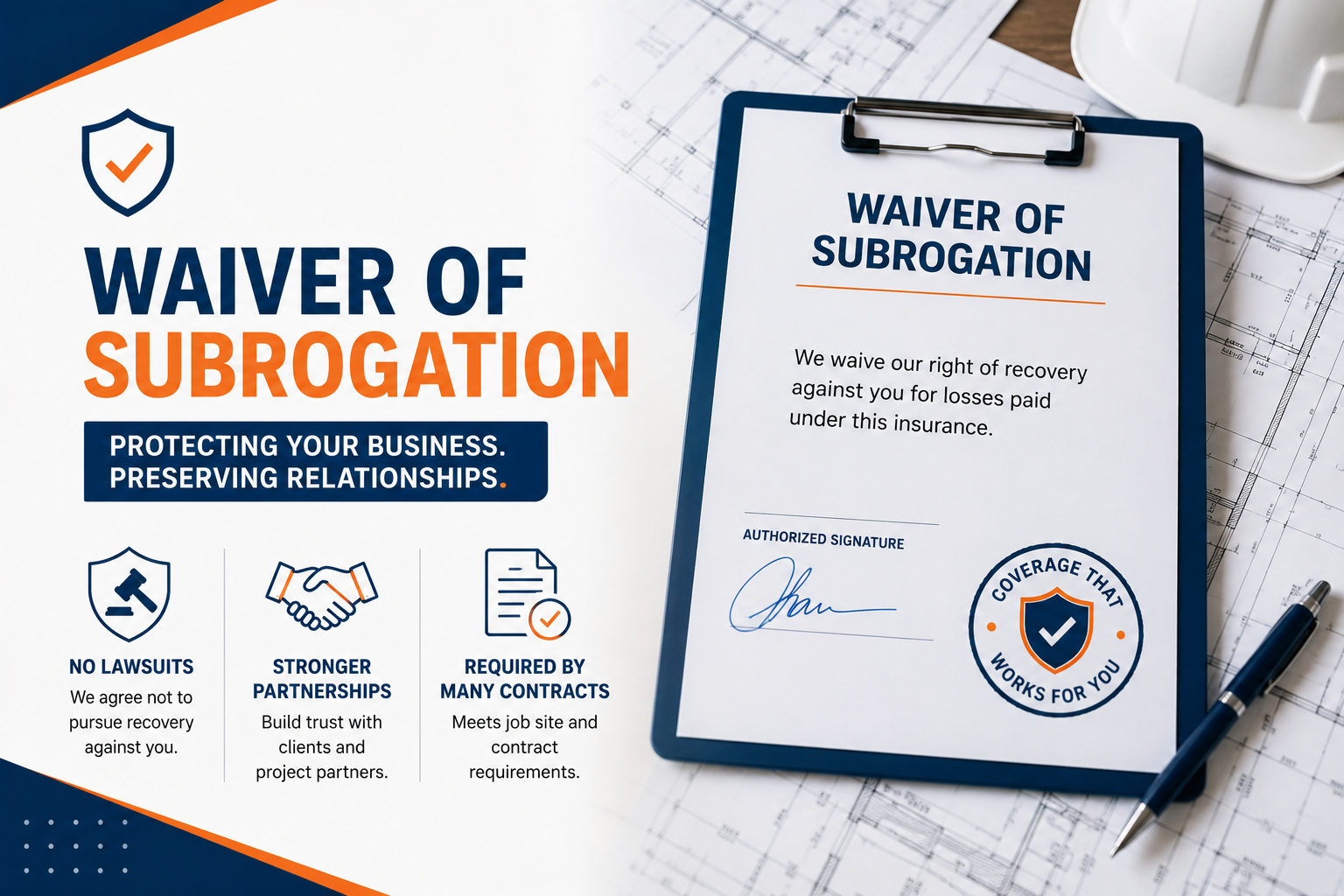
A waiver of subrogation is an insurance provision that limits an insurer’s right to seek reimbursement from another party after paying a covered claim. In contractor insurance, a project owner, general contractor, landlord, property manager, or government agency may require the contractor’s policies to include a waiver in its favor.
For example, suppose a subcontractor’s employee is injured at a construction site and receives workers’ compensation benefits. Without a waiver, the workers’ compensation insurer might pursue the project owner or general contractor if it believes that party contributed to the accident. If the policy contains an applicable waiver of subrogation, the insurer may be prevented from pursuing the protected party, subject to the endorsement’s wording and applicable law.
A waiver of subrogation does not eliminate insurance coverage or prevent the insurer from paying a covered claim. It changes what the insurer may do after making that payment.
Waiver of Subrogation Meaning at a Glance
| Term | What it generally means |
|---|---|
| Subrogation | An insurer’s right to pursue a responsible third party after paying a covered claim |
| Waiver of subrogation | An agreement limiting or giving up that recovery right against a specified party |
| Endorsement | A document that modifies the terms of an insurance policy |
| Certificate holder | A party receiving evidence that insurance exists |
| Additional insured | A party receiving limited protection under another business’s policy |
| Primary and noncontributory | Wording affecting which applicable policy responds first and whether contribution is sought |
A waiver is generally the intentional surrender of a recognized right. In insurance, the right being surrendered is the insurer’s ability to recover certain claim payments from the protected party.
How Does Subrogation Work?
Subrogation allows an insurance company that has paid a covered loss to pursue another party responsible for causing that loss.
Consider this example:
- A plumbing contractor accidentally damages a water line.
- Water damages property owned by the project owner.
- The owner’s property insurer pays for the covered repairs.
- The property insurer investigates who caused the damage.
- The insurer seeks reimbursement from the plumber or the plumber’s liability insurer.
The property insurer effectively steps into its policyholder’s position to pursue recovery from the responsible party.
Subrogation can help insurers recover claim payments and may prevent the insured party from collecting twice for the same loss. However, it can also lead to lawsuits between project participants after the immediate damage has already been repaired.
Construction contracts commonly use waivers to reduce that possibility and allocate certain insured losses to the policies the parties agreed would cover them.
How Does a Waiver of Subrogation Work?
A waiver of subrogation generally prevents the insurer from pursuing the person or organization protected by the waiver for certain covered losses.
Suppose an HVAC subcontractor signs a contract requiring a workers’ compensation waiver of subrogation in favor of the general contractor.
An HVAC employee is later injured at the project. The employee receives workers’ compensation benefits from the HVAC contractor’s insurer. If the endorsement applies, the insurer may be restricted from pursuing the general contractor to recover those payments.
Sonoma County explains that a workers’ compensation waiver endorsement prevents a vendor’s workers’ compensation insurer from seeking reimbursement from the county. The county also notes that insurers may charge for the endorsement.
The exact effect depends on:
- The policy containing the waiver
- The endorsement language
- The party named or otherwise protected
- The work covered by the agreement
- When the contract was signed
- When the accident occurred
- Applicable state law
A waiver should never be assumed to apply more broadly than its written terms.
Why Do Construction Contracts Require Waivers?
Project owners and general contractors often require waivers to reduce the risk that a contractor’s insurer will pursue them after paying a claim.
A waiver may help:
- Reduce recovery lawsuits between project participants
- Preserve the risk allocation negotiated in the contract
- Protect the project owner or general contractor from certain insurer claims
- Avoid disputes after an insured property or workers’ compensation loss
- Satisfy government or commercial contract requirements
- Coordinate insurance among contractors and subcontractors
Current New York State contract requirements provide an example. They require contractors to include waivers of the insurer’s subrogation rights under specified commercial general liability, auto, umbrella, and workers’ compensation policies, and permit blanket waiver endorsements when acceptable.
A waiver does not mean the protected party cannot be responsible for an accident. It means the insurer agrees to limit a particular recovery right under the conditions stated in the policy.
Which Contractor Insurance Policies Can Include a Waiver?
Waiver requirements can apply to several policies.
Workers’ Compensation Insurance
Workers’ compensation waivers are common in construction and service contracts.
When an employee is injured, the employer’s workers’ compensation insurer may pay qualifying medical expenses, wage benefits, or other statutory benefits. If another project participant contributed to the injury, the insurer may otherwise have recovery rights against that party.
A waiver endorsement can restrict those rights in favor of a specified customer, general contractor, owner, or government entity.
Importantly, a workers’ compensation waiver generally does not take away the injured employee’s right to claim applicable benefits. It addresses the insurer’s recovery rights after paying the claim.
Commercial General Liability Insurance
A general liability waiver may restrict the contractor’s insurer from seeking reimbursement from a protected project participant after paying a covered bodily injury or property damage claim.
The exact effect can be complicated when the protected organization is also an additional insured. Additional insured status and waiver of subrogation are separate requirements, even when both appear in the same contract.
Commercial Property and Builder’s Risk
Property and builder’s risk policies frequently include subrogation provisions because one insurer may pay for project damage caused by another participant.
A waiver can limit recovery actions among:
- Owners
- Contractors
- Subcontractors
- Architects
- Engineers
- Material suppliers
- Other insured project participants
The scope may be limited to losses covered by the property policy or to work performed under the construction contract.
Commercial Auto Insurance
Some contracts require waivers under business auto policies. Availability and acceptable wording depend on the insurer and state.
The waiver may relate to covered accidents involving owned, hired, leased, or non-owned vehicles used for contract work.
Commercial Umbrella or Excess Liability
When a contract requires a waiver under underlying liability policies, it may also require corresponding protection under umbrella or excess coverage.
Contractors should verify that the umbrella policy follows the relevant underlying terms or contains its own acceptable endorsement.
Blanket vs. Scheduled Waiver of Subrogation
A waiver may be scheduled or blanket.
Scheduled Waiver
A scheduled waiver identifies the protected person or organization by name.
The insurance agent may require:
- Organization’s legal name
- Address
- Project name
- Contract number
- Work location
- Type of policy requiring the waiver
This can provide clear evidence that the specified party is protected.
Blanket Waiver
A blanket endorsement may apply when the contractor agrees in a qualifying written contract to waive subrogation rights in favor of another party.
Blanket endorsements can simplify compliance for contractors working with many customers. However, they usually contain conditions, such as requiring the written contract to be signed before the loss occurs.
Texas insurance regulators explain that when a policy contains only a blanket waiver endorsement, a certificate should state that the policy contains a blanket endorsement rather than falsely representing that a specific certificate holder is individually named.
Contractors should confirm whether the written agreement satisfies every condition of the blanket endorsement.
Waiver of Subrogation vs. Additional Insured
These provisions serve different purposes.
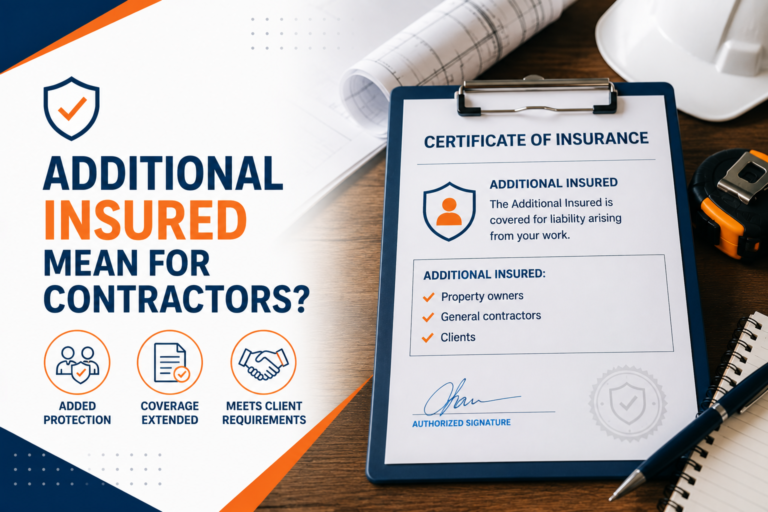
Additional Insured Status
Additional insured status gives another party limited protection under the contractor’s liability policy.
It may allow a project owner or general contractor to seek a defense and coverage for certain claims connected to the contractor’s work.
Waiver of Subrogation
A waiver limits the insurer’s right to pursue the protected party after paying a claim.
A contract may require both because one provision does not automatically provide the other.
| Requirement | Main purpose |
|---|---|
| Additional insured | Gives another party limited insured status |
| Waiver of subrogation | Restricts certain insurer recovery actions |
| Primary and noncontributory | Determines how applicable insurance interacts |
| Certificate holder | Receives evidence of insurance |
Waiver of Subrogation vs. Primary and Noncontributory
Primary and noncontributory wording affects the order in which insurance policies respond.
When a contractor’s policy is primary, it is generally intended to respond before the additional insured’s other applicable insurance. Noncontributory wording generally means the contractor’s insurer will not seek contribution from that other insurance for the covered claim.
A waiver of subrogation addresses what happens after an insurer pays and considers pursuing another party.
The requirements can work together, but they are not interchangeable. A contract may require:
- Additional insured status
- Primary and noncontributory coverage
- Waiver of subrogation
Each should be supported by the policy or an appropriate endorsement.
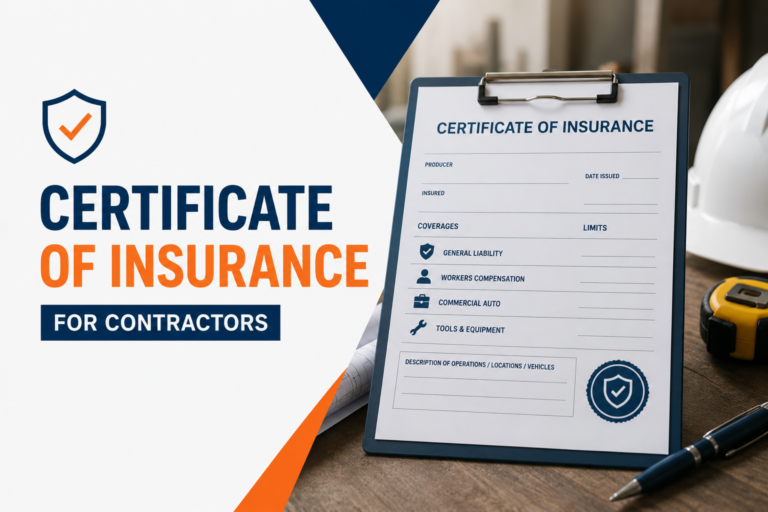
Does a Certificate of Insurance Prove the Waiver?
A certificate of insurance may indicate that a waiver applies, but the certificate cannot create or expand the waiver.
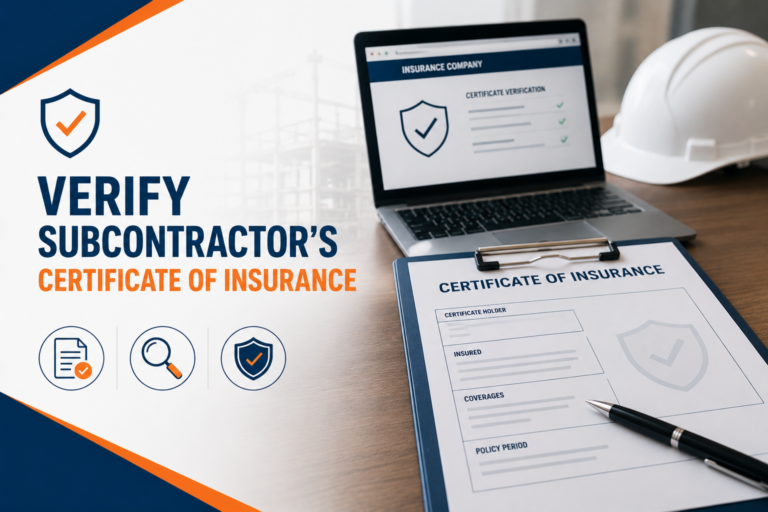
The Texas Department of Insurance states that the waiver-of-subrogation box on a certificate should be checked only when the policy contains an endorsement naming the certificate holder. It also allows a certificate to state that the policy has a blanket waiver endorsement when that is what the policy actually provides.
The best evidence is generally:
- A current certificate of insurance
- The actual waiver-of-subrogation endorsement
- The written contract triggering a blanket endorsement
- Correct legal names and project information
- Active policy dates
Words typed into the description-of-operations box cannot replace an endorsement or change the insurance policy.
How Do Contractors Get a Waiver of Subrogation?
1. Review the Contract
Find every waiver requirement and identify which policies must include it.
The contract may require waivers under:
- General liability
- Workers’ compensation
- Commercial auto
- Builder’s risk
- Property insurance
- Umbrella or excess liability
2. Send the Complete Requirement to the Agent
Do not paraphrase the insurance section. Send the exact contract wording to the insurance agent or broker.
3. Provide the Protected Party’s Details
Provide the customer’s or project owner’s:
- Full legal name
- Address
- Project name
- Project address
- Contract number
4. Confirm Whether a Blanket Endorsement Applies
Ask whether the policy already includes a blanket waiver and what conditions must be satisfied.
5. Request a Scheduled Endorsement When Necessary
When the blanket endorsement does not apply or the contract requires a specifically named party, request a scheduled endorsement.
6. Obtain the Endorsement Before Work Begins
Do not wait until after an accident. An insurer generally will not retroactively modify a policy to protect a party from a known loss.
7. Retain the Documents
Keep the contract, COI, endorsement, and related correspondence with the project records.
How Much Does a Waiver of Subrogation Cost?
The cost varies by insurer, policy type, state, payroll, project, and whether the waiver is blanket or scheduled.
Possible pricing methods include:
- No separate charge
- A flat endorsement fee
- A percentage of the applicable premium
- A charge based on payroll connected to the project
- Additional underwriting based on the protected party or operations
Workers’ compensation waivers may carry an additional premium because the insurer is giving up a potential recovery right. Sonoma County specifically warns contractors that many workers’ compensation insurers charge for these endorsements.
Contractors should review waiver requirements before submitting a bid so any additional insurance cost can be included in the project price.
Risks and Limitations Contractors Should Understand
The Waiver May Be Limited to One Project
A scheduled endorsement may apply only to work performed under a specific agreement.
It May Require a Written Contract
Blanket coverage often depends on a written agreement executed before the loss.
It Does Not Create Insurance Coverage
The policy must first cover the claim. A waiver does not make excluded work or damage insured.
It Does Not Increase Policy Limits
The contractor still has the same liability, property, or workers’ compensation limits.
It May Reduce the Insurer’s Recovery Options
Because the insurer cannot pursue the protected party, the carrier may charge additional premium or restrict eligibility.
State Law Can Affect Enforcement
The effect of a waiver can vary according to state insurance, workers’ compensation, construction, and contract law.
It Does Not Replace Indemnification Language
A waiver concerns the insurer’s recovery rights. Contractual indemnification concerns one party’s obligation to defend or reimburse another. These are separate provisions.
Common Contractor Mistakes
Checking the Box Without an Endorsement
A COI should not state that a waiver applies unless the policy supports the statement.
Assuming a Blanket Waiver Covers Everyone
The written contract and endorsement conditions still determine who qualifies.
Requesting the Waiver After an Accident
The waiver should be arranged before work and before a known loss.
Using the Wrong Legal Name
The named organization should match the entity identified in the contract.
Overlooking Workers’ Compensation
A contract may require a workers’ compensation waiver even when liability policies already include similar wording.
Ignoring Subcontractors
General contractors should require subcontractors to satisfy the same waiver requirements when the contract transfers those obligations downstream.
Frequently Asked Questions
What does waiver of subrogation mean in construction?
It means an insurer gives up or limits its right to pursue a specified project participant after paying a covered claim.
Is a waiver of subrogation the same as additional insured coverage?
No. Additional insured status provides limited coverage under the policy. A waiver restricts the insurer’s recovery rights.
Does a waiver prevent an employee from filing a workers’ compensation claim?
Generally, no. A workers’ compensation waiver usually affects the insurer’s right to recover from the protected party, not the employee’s right to eligible benefits.
Can the waiver be shown on a COI?
A COI may indicate that a waiver endorsement exists, but the actual policy and endorsement control.
Is a waiver of subrogation required by law?
Not universally. It is commonly required by contracts, leases, project owners, general contractors, and government agencies.
Can a blanket waiver satisfy a contract?
Possibly, if the written agreement and protected party satisfy all conditions of the blanket endorsement.
Does the waiver increase insurance limits?
No. It changes recovery rights, not the amount of insurance available.
Should contractors agree to a waiver before asking their insurer?
No. Review the requirement with the insurance agent before signing the contract because the endorsement may be unavailable or carry an additional cost.
Conclusion
A waiver of subrogation for contractors limits an insurance company’s ability to seek reimbursement from a protected project participant after paying a covered claim.
It is commonly requested by general contractors, project owners, landlords, property managers, and government agencies. The requirement may apply to workers’ compensation, general liability, commercial auto, builder’s risk, property, or umbrella insurance.
A waiver is different from additional insured status, primary and noncontributory coverage, and contractual indemnification. Construction agreements frequently require several of these provisions at the same time.
Before accepting the requirement, send the complete contract to a licensed insurance professional. Confirm which policies need the waiver, whether a blanket endorsement applies, what it costs, and which documents must be provided.
Most importantly, obtain the endorsement before work begins. A certificate alone cannot create a waiver that is not contained in the policy.
Editorial review: This guide was researched and reviewed by the Coverage Editorial Team using government agencies, insurance regulators, licensing authorities, policy documentation, and current industry pricing sources.