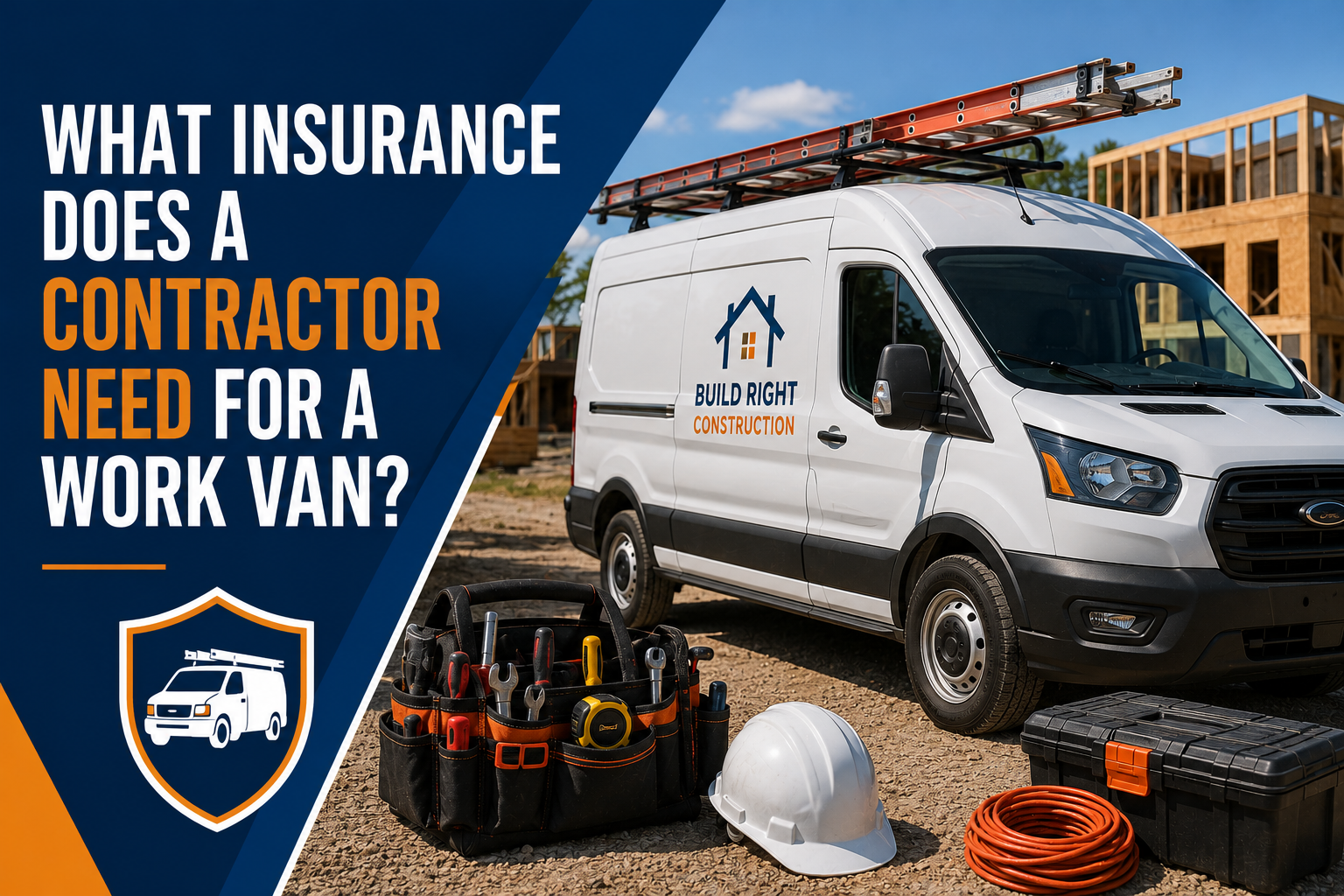
What Insurance Does a Contractor Need for a Work Van?
A contractor who uses a van for business usually needs commercial auto insurance. A personal auto policy may not cover regular business use.
However, commercial auto insurance alone may not be enough. A contractor may also need tools and equipment coverage, hired auto coverage, non-owned auto coverage, and workers’ compensation.
The right combination depends on several factors. These include who owns the van, who drives it, what it carries, and how the business uses it.
Work Van Insurance at a Glance
| Coverage | What it may protect |
|---|---|
| Commercial auto liability | Injuries and property damage caused to others |
| Collision | Damage to the contractor’s van after a crash |
| Comprehensive | Theft, vandalism, fire, hail, and other covered losses |
| Uninsured/underinsured motorist | Losses caused by drivers with little or no insurance |
| Medical payments or PIP | Certain medical costs for drivers and passengers |
| Hired auto | Business use of rented or leased vehicles |
| Non-owned auto | Business liability from employee-owned vehicles |
| Tools and equipment insurance | Portable tools stored or transported in the van |
| Attached equipment coverage | Shelving, racks, service bodies, and other van upgrades |
| Commercial umbrella | Extra liability limits above qualifying policies |
| Workers’ compensation | Eligible work-related injuries involving employees |
Not every contractor needs every option. Still, most work vans need more than basic liability coverage.
Why Contractors Usually Need Commercial Auto Insurance
Commercial auto insurance protects vehicles used for business.
A contractor may need it when the van is used to:
- Visit customer properties
- Travel between jobsites
- Transport tools or materials
- Pick up supplies
- Carry employees
- Tow a trailer
- Make deliveries
- Provide mobile repair services
The NAIC states that personal auto insurance usually does not cover vehicles used for work. It also notes that commercial policies may offer higher limits and broader business protection.
The SBA also advises business owners to consider commercial vehicle insurance. This can apply even when they use a personal vehicle for business errands.
Therefore, contractors should describe the van’s actual use to the insurer. They should not rely on assumptions about a personal policy.
1. Commercial Auto Liability Insurance
Liability coverage is the foundation of a commercial auto policy.
It may pay for qualifying claims involving:
- Injuries to another driver
- Injuries to pedestrians or passengers
- Damage to another vehicle
- Damage to a fence, building, or garage
- Legal defense expenses
- Settlements or court judgments
For example, an employee may rear-end another vehicle while driving to a jobsite. Commercial auto liability may cover the other driver’s injuries and vehicle damage.
States set their own minimum insurance or financial responsibility rules. However, the legal minimum may not provide enough protection for a business.
A serious accident can involve several injured people. It can also cause major property damage. For that reason, contractors often select limits above the state minimum.
California’s commercial insurance guide explains that business auto policies often use a combined single limit. This limit applies to bodily injury and property damage together.
2. Collision Coverage
Collision coverage helps pay for damage to the insured van after a crash.
It may apply when the van:
- Hits another vehicle
- Strikes a wall or post
- Rolls over
- Hits another object
- Suffers damage in a single-vehicle accident
Liability coverage does not repair the contractor’s own van after an at-fault crash.
Therefore, collision coverage matters when the business cannot easily replace the vehicle. A lender or leasing company may also require it.
The contractor chooses a deductible. A higher deductible may reduce the premium. However, the business must pay that amount after a covered loss.
3. Comprehensive Coverage
Comprehensive coverage protects against many non-collision losses.
Depending on the policy, it may cover:
- Theft of the van
- Vandalism
- Fire
- Hail
- Falling objects
- Broken glass
- Animal strikes
- Certain weather damage
For example, someone may steal the van from a hotel parking lot. Comprehensive coverage may pay for the insured vehicle, subject to the deductible and policy value.
However, it usually does not cover all portable tools inside the van.
The NAIC distinguishes comprehensive coverage from collision coverage. Comprehensive generally addresses theft, vandalism, and other covered losses that do not involve a collision.
4. Tools and Equipment Insurance
Commercial auto insurance generally protects the van. It does not usually protect drills, saws, testing equipment, and other removable tools inside it.
Contractors normally insure those items through:
- Tools and equipment insurance
- A contractors’ equipment floater
- Commercial inland marine insurance
The Texas Department of Insurance identifies contractor equipment and property in transit as common inland marine exposures.
A van break-in may involve two separate claims:
- Commercial auto may cover the broken window or damaged door.
- Tools insurance may cover the stolen equipment.
Contractors should check the tools policy carefully. It may contain conditions for locked vehicles, overnight parking, and visible forced entry.
How Much Tools Coverage Is Needed?
The limit should reflect the most equipment carried in one van.
Suppose a contractor usually carries:
- $12,000 in power tools
- $6,000 in testing equipment
- $4,000 in ladders and accessories
- $3,000 in employee-owned tools
The total exposure is $25,000. A $10,000 vehicle sublimit would leave a large gap.
Contractors should also review per-item limits. An expensive inspection camera may need to be listed separately.
5. Coverage for Permanently Attached Equipment
Many contractors modify their vans for work.
Common upgrades include:
- Built-in shelving
- Tool drawers
- Ladder racks
- Partitions
- Service bodies
- Mounted generators
- Lift gates
- Refrigeration systems
- Custom electrical systems
The insurer may treat this property as part of the vehicle. However, the contractor must usually report the modifications.
Otherwise, the policy may value the van as a standard vehicle. That value may not include an expensive professional upfit.
The NAIC advises business owners to review coverage for permanently attached vehicle equipment. Examples include generators and storage units.
Contractors should keep receipts and photographs of every major upgrade.
6. Uninsured and Underinsured Motorist Coverage
Not every driver carries enough insurance.
Uninsured motorist coverage may help when an at-fault driver has no insurance. Underinsured motorist coverage may apply when the driver’s limits are too low.
Depending on state law and the policy, coverage may address:
- Medical bills
- Lost income
- Bodily injury damages
- Hit-and-run accidents
- Damage to the work van
Rules vary by state. Some states require insurers to offer this coverage. Others allow the customer to reject it.
A contractor should consider the financial effect of an accident caused by an uninsured driver. Rejecting the coverage may reduce the premium, but it can also increase the business’s risk.
7. Medical Payments or Personal Injury Protection
Medical payments coverage may help pay certain medical expenses for the van’s driver and passengers.
Personal injury protection, or PIP, may provide broader benefits. Depending on the state, it may include:
- Medical treatment
- Lost income
- Replacement services
- Funeral expenses
These coverages vary widely. Contractors should ask how they work with health insurance and workers’ compensation.
8. Hired Auto Coverage
Hired auto coverage protects the business when it uses certain rented or leased vehicles.
A contractor may rent a vehicle when:
- The work van is being repaired
- A large project requires another truck
- The business travels out of town
- A short-term job requires a different vehicle
A business auto policy can cover owned, hired, and non-owned vehicles. However, the contractor must select the correct coverage.
Hired auto liability may cover claims caused to other people. It does not always cover damage to the rented vehicle.
Before declining the rental company’s damage waiver, ask about:
- Physical damage
- Loss of use
- Towing charges
- Administrative fees
- Diminished value
- The deductible
The rental contract may impose costs that the auto policy does not cover.
9. Non-Owned Auto Coverage
Non-owned auto coverage protects the business when employees use personal vehicles for work.
For example, an employee may use a personal car to:
- Pick up supplies
- Visit a customer
- Travel to a jobsite
- Deliver documents
- Handle an emergency call
The employee’s personal policy may respond first. However, the contractor’s business may also face a lawsuit.
Non-owned auto liability may protect the company in that situation. It generally does not repair the employee’s vehicle.
This coverage can be important even when the contractor owns only one van.
10. Commercial Umbrella Insurance
Commercial umbrella insurance provides additional liability limits above certain underlying policies.
For example, a severe van accident may exceed the commercial auto liability limit. An umbrella policy may provide extra coverage after that limit is exhausted.
Contractors may consider an umbrella when:
- Several employees drive
- The company owns multiple vehicles
- Vans travel long distances
- Vehicles tow heavy trailers
- The business has valuable assets
- Client contracts require higher limits
The umbrella must recognize the commercial auto policy as underlying insurance.
11. Workers’ Compensation Insurance
Workers’ compensation is separate from commercial auto insurance.
It may cover eligible employees who suffer work-related injuries. This can include injuries from a vehicle accident during work.
For example, one crash may involve several policies:
- Commercial auto may cover injuries to another driver.
- Workers’ compensation may cover the employee driving the van.
- Tools insurance may cover damaged equipment.
- Collision coverage may repair the van.
Workers’ compensation rules vary by state. The contractor should check the requirements where employees work.
What About Materials Inside the Van?
A contractor’s van may carry more than tools.
It may also contain:
- HVAC units
- Plumbing fixtures
- Cabinets
- Flooring
- Electrical supplies
- Customer property
- Materials awaiting installation
A tools policy may not cover every category.
Materials awaiting installation may require an installation floater. Customer property may need property-of-others coverage.
Therefore, contractors should divide van contents into four groups:
- Reusable tools
- Materials awaiting installation
- Customer property
- Permanently installed van equipment
Each group may need different protection.
Does a Personally Owned Work Van Need Commercial Insurance?
Possibly.
Vehicle ownership is important, but use matters too.
A personally titled van may still need commercial coverage when it is regularly used for:
- Service calls
- Jobsite travel
- Tool transportation
- Deliveries
- Employee driving
- Trailer towing
The NAIC advises business owners not to assume that personal auto insurance covers business activity.
The contractor should disclose all business use. Then, the insurer can confirm whether a personal policy, business-use endorsement, or commercial policy is appropriate.
Do Federal Commercial Vehicle Rules Apply?
Many contractors use light vans that do not fall under federal motor carrier insurance rules.
However, federal requirements may apply to certain operations. These can include covered interstate motor carriers, heavier vehicle combinations, and transportation of regulated materials.
FMCSA states that insurance requirements depend on the business type, operating authority, cargo, and vehicle type.
A pickup and trailer combination may also qualify as a commercial motor vehicle when it meets federal weight or use standards. FMCSA notes that federal CMV status can depend on the vehicle combination’s weight rating.
Contractors who cross state lines or transport regulated materials should review FMCSA and state requirements.
Common Work Van Insurance Mistakes
Using a Personal Policy Without Disclosing Business Use
This can create serious problems after a claim.
Buying Only State-Minimum Liability
The minimum may not protect the business after a severe accident.
Assuming Tools Are Covered
Commercial auto usually does not cover removable tools.
Forgetting Hired and Non-Owned Autos
A business may face liability even when it does not own the vehicle involved.
Leaving Employees Off the Policy
Regular drivers should be disclosed and approved.
Failing to Report Van Modifications
Custom shelves, racks, and service equipment can add significant value.
Choosing Tools Limits That Are Too Low
The limit should reflect the maximum amount carried at one time.
Work Van Insurance Checklist
Before buying or renewing coverage, confirm:
- The correct business appears as the named insured.
- Every business-owned van appears on the policy.
- All regular drivers are disclosed.
- Business and personal use are described accurately.
- Liability limits match the company’s risk.
- Collision and comprehensive coverage are included when needed.
- Uninsured motorist options have been reviewed.
- Rented vehicles receive hired auto protection.
- Employee-owned vehicles receive non-owned auto protection.
- Tools inside the van have separate coverage.
- Van modifications are included in the insured value.
- Trailers appear on the policy when required.
- Workers’ compensation covers eligible employees.
- The umbrella recognizes commercial auto as underlying coverage.
Frequently Asked Questions
Can a contractor use personal auto insurance for a work van?
Possibly, but only when the insurer accepts the business use. Regular contractor operations often require commercial auto insurance.
Does commercial auto insurance cover tools?
Usually not. Portable tools normally need tools and equipment or inland marine insurance.
Does comprehensive coverage cover a stolen van?
It may cover theft of the insured vehicle. It does not usually cover every removable item inside.
Are employees covered while driving the van?
They may be covered when they are authorized and meet the policy’s driver requirements.
Does hired auto cover a rented replacement van?
It may cover liability from a rented vehicle. Physical damage must be reviewed separately.
What covers an employee’s personal car used for work?
The employee’s policy may apply first. Non-owned auto liability may protect the contractor’s business.
Are ladder racks and built-in shelving covered?
They may be covered when the insurer knows about them and includes their value.
Does a contractor need umbrella insurance?
Not every contractor needs it. However, it may provide valuable extra limits after a serious accident.
Conclusion
A contractor’s work van usually needs commercial auto liability insurance. Collision and comprehensive coverage may also protect the vehicle itself.
Still, commercial auto does not cover every work-related exposure.
Contractors may also need tools and equipment insurance, hired auto coverage, non-owned auto coverage, and workers’ compensation. Valuable van modifications should also appear in the insured vehicle’s value.
Start by identifying who owns and drives the van. Next, calculate the value of the vehicle, tools, materials, and installed equipment.
Finally, review every coverage and limit with a licensed insurance professional. The policy should reflect how the contractor actually uses the van each day.
Editorial review: This guide was researched and reviewed by the Coverage Editorial Team using government agencies, insurance regulators, licensing authorities, policy documentation, and current industry pricing sources.