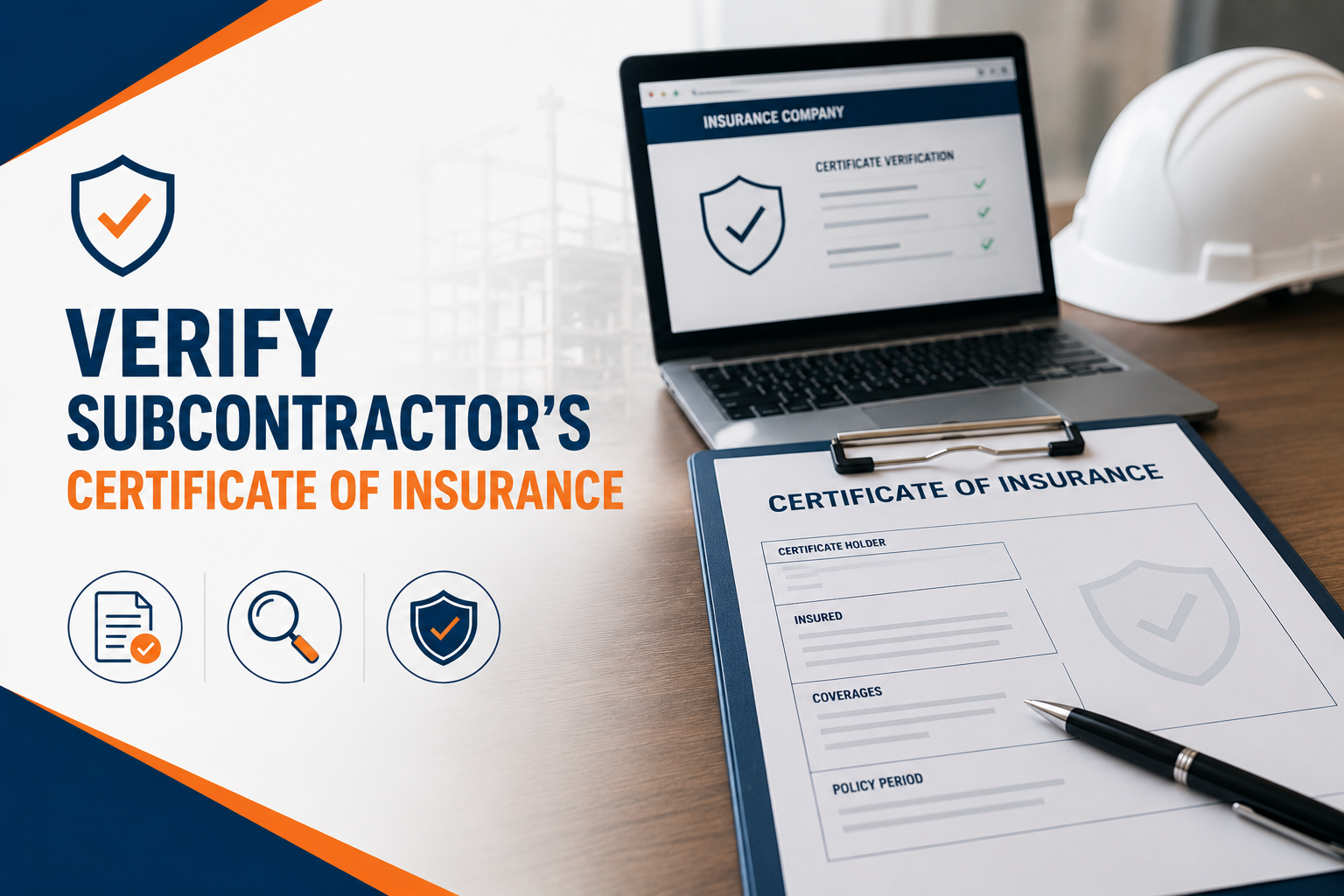
How to Verify a Subcontractor’s Certificate of Insurance
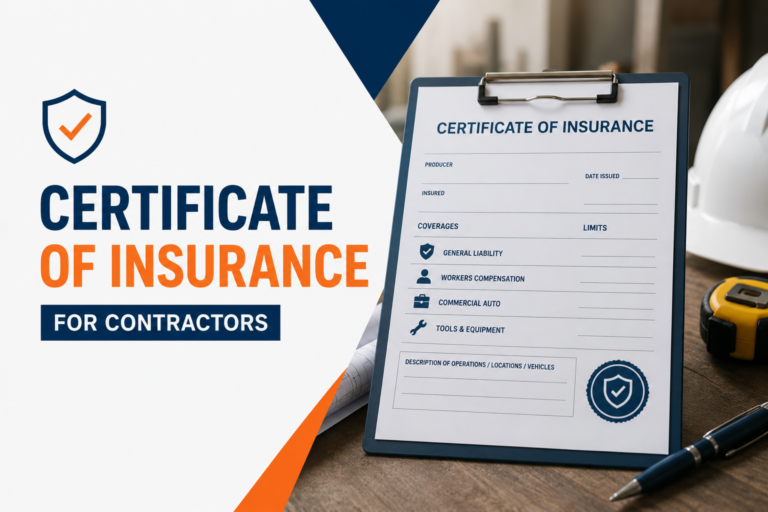
To verify a subcontractor’s certificate of insurance, do more than check whether a document has been provided. Confirm the subcontractor’s legal name, policy dates, insurance companies, coverage types, and limits, then contact the issuing insurance agency using independently verified information.
You should also obtain the actual endorsements required by the subcontract. A certificate of insurance, commonly called a COI, does not automatically prove additional insured status, completed operations coverage, primary and noncontributory wording, or a waiver of subrogation.
A reliable verification process helps prevent uninsured subcontractors from entering a job site, reduces premium-audit problems, and makes it easier to determine which policy may respond after an accident.
Subcontractor COI Verification Checklist
Before approving a subcontractor, verify:
- The named insured matches the subcontracting business
- The certificate came from a legitimate insurance agent or broker
- The insurance companies are licensed or authorized
- Policy numbers appear complete and consistent
- Coverage is active for the project period
- General liability limits satisfy the subcontract
- Workers’ compensation coverage or exemption is valid
- Commercial auto coverage applies when vehicles are used
- Additional insured endorsements have been provided
- Ongoing and completed operations requirements are satisfied
- Primary and noncontributory coverage is documented
- Waiver-of-subrogation endorsements are attached
- Umbrella, professional, or pollution coverage is included when required
- Expiration dates are tracked throughout the project
The certificate should be treated as the starting point of verification—not as complete proof of every contractual insurance requirement.
1. Request the COI Before Work Begins
Require the subcontractor to submit insurance documentation before:
- Entering the job site
- Delivering tools or materials
- Beginning demolition or installation
- Bringing employees onto the property
- Using vehicles for the project
- Receiving an initial payment
The COI should preferably come directly from the insurance agent, broker, or company rather than only from the subcontractor.
A document sent by the subcontractor is not automatically fraudulent, but direct delivery reduces the possibility that the file was altered after issuance.
Include the insurance requirements in the written subcontract and establish a deadline for submitting:
- Certificate of insurance
- Required policy endorsements
- Workers’ compensation evidence
- Specialized coverage documents
- Updated certificates after renewal
Do not allow urgency or scheduling pressure to replace proper verification.
2. Confirm the Subcontractor’s Legal Business Name
The named insured shown on the certificate should match the legal entity signing the subcontract.
For example, if the agreement is signed by Smith Electrical Services LLC, the certificate should not identify only “John Smith” unless the insurance agent confirms that the individual and LLC are properly covered under the policy.
Review:
- Legal entity name
- DBA or trade name
- Business address
- State registration
- Form W-9
- Contractor license
- Subcontract signature
Potential warning signs include:
- The certificate names a different business.
- The insured entity is no longer active.
- The address belongs to an unrelated organization.
- The subcontractor says it is covered under another company’s policy.
- A parent, affiliate, or previous business appears instead of the contracting entity.
A policy issued to one company does not automatically insure every related business or owner. Ask the issuing agent for clarification when the names do not match.
3. Examine the Producer Information
The producer section identifies the agent, broker, or agency responsible for issuing the certificate.
It may include:
- Agency name
- Contact person
- Telephone number
- Email address
- Mailing address
Do not rely exclusively on the contact information printed on a suspicious certificate. Search the agency independently through the applicable state insurance department or its official business website.
California’s Department of Insurance, for example, provides a license-status search that can be used to review an agent, broker, or insurance business entity. The NAIC also recommends checking whether the agent and insurance company are licensed through state insurance regulators.
Contact the producer and ask whether:
- The agency issued the certificate.
- The listed policies are active.
- The subcontractor is the named insured.
- The limits and dates are accurate.
- The required endorsements have been issued.
- Any cancellation or nonrenewal is pending.
The producer may have confidentiality restrictions, but it should generally be able to confirm whether it issued the document and direct you through its verification process.
4. Verify the Insurance Companies
A certificate can list several insurers because general liability, auto, workers’ compensation, and umbrella coverage may be issued by different companies.
Review the “insurers affording coverage” section and match each policy to the correct insurer letter.
For every listed insurer, check:
- Complete legal company name
- NAIC company number, when shown
- Licensing or authorization in the relevant state
- Whether the company name matches the policy information
- Whether it is an admitted or surplus-lines insurer
The NAIC Consumer Insurance Search provides company information and advises users to confirm licensing through the applicable state insurance department. Company subsidiaries can have similar names, so verification should use the exact insurer listed on the certificate.
A recognizable brand name is not enough. The underwriting company shown on the document may be a separate subsidiary.
5. Confirm Policy Dates and Current Status
Review the effective and expiration date of every policy.
Coverage should:
- Begin before the subcontractor starts work
- Remain active throughout the project
- Satisfy any post-completion requirement
- Match the period stated in the subcontract
A certificate showing a future effective date does not provide coverage today. A policy expiring next week may require renewal documentation before work continues.
Contact the issuing agency to confirm that the policies have not been:
- Canceled
- Nonrenewed
- Replaced
- Rewritten under another entity
- Changed after the certificate was issued
A COI reflects information as of its issuance date. It does not guarantee that the policy will remain unchanged until the expiration date.
Certificate-holder status also does not automatically create cancellation-notice rights. Those rights depend on the policy, endorsements, and applicable law rather than the certificate alone.
6. Compare Coverage Limits With the Subcontract
Do not approve a certificate simply because it shows insurance. Compare each listed limit with the written requirements.
For general liability, review:
- Each-occurrence limit
- General aggregate
- Products-completed operations aggregate
- Personal and advertising injury limit
- Damage-to-rented-premises limit
- Medical expense limit
For commercial auto, review the combined single limit or applicable bodily injury and property damage limits.
For employers’ liability, review:
- Each-accident limit
- Disease policy limit
- Disease per-employee limit
If the subcontract requires higher limits than the subcontractor’s primary policy provides, determine whether an umbrella or excess liability policy supplies the remaining amount.
A $1 million general liability limit does not satisfy a $2 million each-occurrence requirement merely because a $2 million general aggregate also appears on the certificate. These limits measure different things.
7. Verify Additional Insured Status
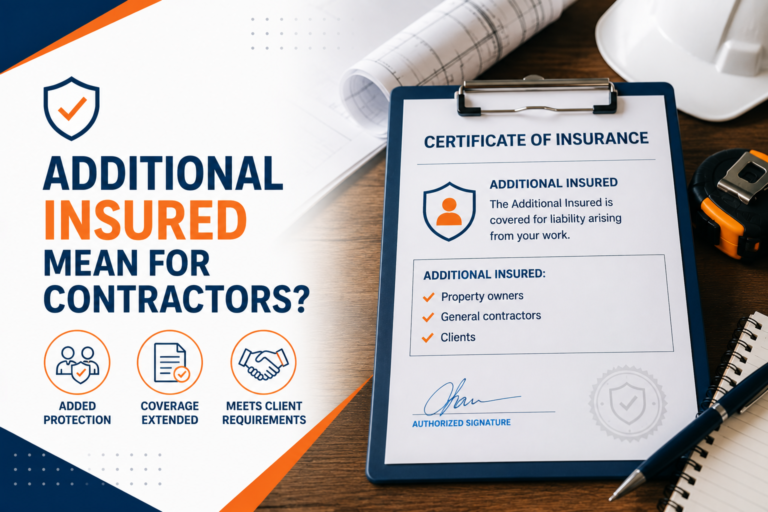
If the subcontract requires your company, the project owner, or another organization to be an additional insured, request the actual endorsement.
Being listed as certificate holder does not make an organization an additional insured. New York insurance regulators expressly distinguish these two statuses: a certificate holder receives evidence of insurance, while an additional insured has been granted insured status under the policy.
Additional insured coverage may be provided through:
- A scheduled endorsement naming the organization
- A blanket endorsement triggered by a written contract
- An endorsement included within the policy package
Check:
- Exact legal name of the additional insured
- Applicable project or operations
- Whether the endorsement covers the required policy
- Conditions imposed by blanket wording
- Whether the subcontract was signed before work began
- Whether ongoing and completed operations are included
The Texas Department of Insurance states that a certificate should indicate additional insured status only when the policy or endorsement supports it. The COI cannot independently create that protection.
8. Separate Ongoing From Completed Operations
Additional insured coverage during active construction may not continue after the subcontractor finishes the work.
Ongoing Operations
Ongoing operations coverage relates to the subcontractor’s work while it is being performed.
Examples include:
- A visitor trips over subcontractor equipment.
- Construction debris damages a vehicle.
- Plumbing work causes immediate water damage.
- A subcontractor damages existing flooring during installation.
Completed Operations
Completed operations coverage may apply when finished work later causes covered bodily injury or property damage.
Examples include:
- A pipe connection leaks months later.
- Installed wiring allegedly causes a fire.
- A mounted fixture falls after installation.
- Completed roofing work permits water intrusion.
If the subcontract requires completed operations additional insured protection, collect the applicable endorsement and retain it after project completion.
Do not assume that a checked additional insured box proves both forms of protection.
9. Verify Primary and Noncontributory Coverage
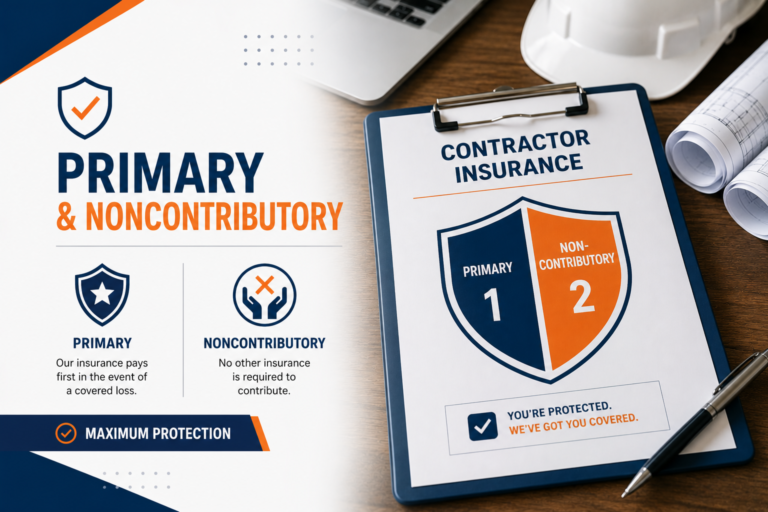
A subcontract may require the subcontractor’s policy to be primary and noncontributory for qualifying additional insured claims.
This generally means:
- The subcontractor’s policy responds before the additional insured’s other applicable insurance.
- The subcontractor’s insurer does not seek contribution from that other insurance, subject to the endorsement.
Additional insured status does not automatically make coverage primary and noncontributory.
Request the actual endorsement or policy provision. Language typed into the certificate’s description-of-operations section cannot create protection absent from the policy.
Texas regulators state that certificates cannot amend, extend, or alter the underlying insurance contract. They must accurately reflect the policy rather than promise broader coverage.
10. Verify Waiver-of-Subrogation Requirements
A waiver of subrogation limits an insurer’s ability to pursue a protected party after paying a covered claim.
The subcontract may require waivers under:
- General liability
- Workers’ compensation
- Commercial auto
- Builder’s risk
- Property insurance
- Umbrella liability
Obtain the actual waiver endorsement.
A waiver may be:
- Scheduled: specifically names the protected organization
- Blanket: applies when required by a qualifying written contract
If the certificate says “waiver of subrogation applies,” verify that the relevant policy contains the endorsement. The Texas Department of Insurance instructs certificate issuers not to indicate a waiver unless the policy supports it.
11. Verify Workers’ Compensation Separately
Workers’ compensation should receive its own verification because state requirements, forms, databases, and exemption rules vary.
Check:
- Correct employer name
- Workers’ compensation insurer
- Policy number
- Effective and expiration dates
- Employers’ liability limits
- States covered
- Waiver-of-subrogation endorsement, when required
Many states maintain coverage-verification resources. New York provides an employer coverage search containing workers’ compensation policy information, while Texas provides workers’ compensation coverage-verification tools through its insurance department.
Verify Exemptions
A subcontractor that claims it is exempt should provide official state documentation when available.
Do not accept only:
- A verbal statement
- A handwritten letter
- Form 1099-NEC
- A subcontractor agreement
- A certificate with the workers’ compensation section left blank
New York, for example, provides an online tool to verify Certificates of Attestation of Exemption. Its guidance also warns that general contractors may be charged workers’ compensation premium for subcontractors who do not furnish proof of their own coverage.
An exemption does not necessarily prove that every person working for the subcontractor is correctly classified.
12. Review Commercial Auto Coverage
Verify commercial auto insurance when the subcontractor:
- Drives onto the job site
- Transports materials
- Tows trailers
- Makes deliveries
- Carries employees
- Uses rented vehicles
- Allows workers to use personal vehicles for business
Determine whether the subcontract requires coverage for:
- Owned autos
- Hired autos
- Non-owned autos
- Any auto
A subcontractor’s general liability policy generally does not replace commercial auto liability coverage for motor vehicle accidents.
Confirm that the policy limits satisfy the contract and that the subcontractor’s actual vehicle use has been disclosed to its insurer.
13. Check Specialized Coverage
Certain trades require documentation beyond general liability and workers’ compensation.
Professional Liability
Request professional liability coverage when the subcontractor provides design, engineering, consulting, inspections, or technical recommendations.
Review:
- Policy limit
- Retroactive date
- Claims-made status
- Extended reporting requirements
Pollution Liability
Pollution coverage may be relevant for mold remediation, asbestos work, excavation, chemical handling, fuel exposure, or environmental services.
Commercial Umbrella
Confirm that the umbrella applies above the required underlying policies and carries the needed limit.
Tools and Equipment
This coverage protects the subcontractor’s own property. It does not generally protect the hiring contractor, but proof may be useful when the subcontractor brings high-value equipment to the site.
Red Flags on a Subcontractor COI
Investigate further when:
- Fonts, spacing, or text sizes appear inconsistent.
- Policy dates or limits look overwritten.
- The insured name differs from the subcontract.
- The producer uses a generic or suspicious email address.
- The insurer cannot be located through regulatory searches.
- Policy numbers are incomplete.
- The certificate lacks producer contact information.
- The subcontractor refuses direct verification.
- Required endorsements are missing.
- Workers’ compensation is blank despite the presence of employees.
- The same certificate is reused for unrelated entities.
- Expiration dates have passed.
- The document promises coverage broader than the attached endorsements.
The New York Department of Financial Services explains that a certificate is only a summary of insurance and may not disclose every policy provision. It must not be misleading or inconsistent with the policy.
Create an Ongoing Verification System
Verification should continue after the subcontractor is approved.
Maintain a tracking system containing:
- Subcontractor legal name
- Insurance company
- Policy number
- Coverage type
- Effective date
- Expiration date
- Required limits
- Endorsements received
- Verification date
- Agency contact
- Renewal status
Set reminders at least 30 days before expiration. Require updated certificates and endorsements before allowing work to continue into a new policy period.
Retain prior documents because completed operations claims may arise after the project ends.
Frequently Asked Questions
Can you verify a COI by calling the insurance company?
Yes. Contact the issuing agency or insurer using independently obtained information and ask it to confirm that the certificate was issued and the policies are active.
Is a COI enough proof of insurance?
It provides evidence of insurance but may not prove additional insured, completed operations, primary and noncontributory, or waiver-of-subrogation requirements. Request the actual endorsements.
How can you tell whether a COI is fake?
Check the producer and insurer independently, compare legal names, examine policy dates and numbers, and contact the issuing agency. Inconsistent formatting and reluctance to permit verification are warning signs.
Does being a certificate holder provide coverage?
No. Certificate-holder status alone generally provides no coverage under the subcontractor’s policy.
How do you verify workers’ compensation?
Use the applicable state workers’ compensation authority or coverage database and confirm the employer name, policy period, and insurer.
Should you verify every subcontractor?
Yes. Each subcontractor should satisfy the project’s insurance requirements before starting work, including lower-tier subcontractors when permitted.
How often should a COI be verified?
Verify it before work begins, after every renewal or policy change, and whenever a project continues beyond the listed expiration date.
Can the subcontractor edit its own certificate?
No. Corrections should come from the authorized insurance agency, broker, or insurer.
Conclusion
Verifying a subcontractor’s certificate of insurance requires more than confirming that a PDF exists.
Start by matching the named insured with the subcontracting entity. Verify the producer and insurance companies independently, confirm policy dates and limits, and contact the issuing agency to validate the certificate.
Then review the actual endorsements for additional insured status, ongoing and completed operations, primary and noncontributory coverage, and waivers of subrogation. Workers’ compensation and exemptions should also be checked through applicable state resources.
Finally, track expiration dates and require renewal documents throughout the project. A consistent verification process can help prevent uninsured losses, rejected claims, premium-audit charges, and disputes over which policy should respond after an accident.
Editorial review: This guide was researched and reviewed by the Coverage Editorial Team using government agencies, insurance regulators, licensing authorities, policy documentation, and current industry pricing sources.