Does Contractor Insurance Cover Completed Work?
Contractor insurance can cover certain claims that arise after a project has been finished. This protection is commonly known as products-completed operations coverage, and it is often included within a contractor’s commercial general liability policy.
Completed operations coverage may help when finished work later causes third-party bodily injury or property damage. For example, it could apply if an improperly installed pipe later leaks and damages a homeowner’s flooring, or if a mounted cabinet falls after installation and injures someone.
However, completed operations coverage is not a warranty on the contractor’s workmanship. It generally does not pay simply because the work is defective, unattractive, incomplete, or must be performed again. Coverage depends on what was damaged, when the damage occurred, who performed the work, and whether any policy exclusions or endorsements apply.
What Is Completed Operations Coverage?
Completed operations coverage addresses a contractor’s potential liability after the work has been completed or abandoned.
The National Association of Insurance Commissioners defines completed operations liability as coverage for contractors, plumbers, electricians, repair shops, and similar businesses when people suffer bodily injury or property damage from defective work or completed operations away from the insured’s premises.
This coverage is important because a contractor’s exposure does not end when the final invoice is paid. Problems may remain hidden until weeks, months, or even years after the contractor leaves the job site.
Completed operations claims commonly involve:
- Plumbing leaks
- Electrical fires
- Failed railings or stairs
- Water intrusion after roofing work
- Improperly secured cabinets or fixtures
- HVAC installations that cause property damage
- Flooring or tile installations that damage other property
- Structural components that fail after installation
The California Department of Insurance identifies completed operations as one of the primary sections of commercial general liability insurance, alongside premises liability and products liability. It describes completed operations as protection for potential bodily injury or property damage arising from completed work.
When Is Contractor Work Considered Completed?
The definition of completed work depends on the policy, but operations are generally treated as completed when one of the following occurs:
- All work required by the contract has been finished.
- All work at a specific job site has been completed.
- The completed portion of the work has been put to its intended use.
- The contractor has abandoned the project.
A project may be considered completed even when minor service, maintenance, correction, or adjustment work remains.
For example, an HVAC system could be considered completed once it has been installed and the homeowner begins using it, even if the contractor plans to return later for a minor adjustment.
The distinction matters because claims arising during active work are generally evaluated as ongoing operations claims, while claims arising after completion may fall under the products-completed operations portion of the policy.
What Does Completed Operations Insurance Cover?
Completed operations coverage may pay for qualifying bodily injury, property damage, legal defense expenses, settlements, and judgments resulting from completed work.
| Completed-work incident | Potential coverage |
|---|---|
| A completed plumbing connection leaks and damages flooring | Resulting property damage may be covered |
| A cabinet falls after installation and injures a homeowner | Bodily injury claim may be covered |
| Faulty wiring causes a fire after the job is finished | Resulting fire damage may be covered |
| A repaired railing fails and causes an injury | Bodily injury and related legal costs may be covered |
| Roofing work allows water to damage ceilings and furniture | Interior property damage may be covered |
| The customer dislikes the appearance of completed work | Usually not covered |
| Defective work must be removed and performed again | Usually not covered |
| The contractor misses a completion deadline | Usually not covered |
Every claim is subject to the specific policy’s limits, conditions, exclusions, and endorsements.
Examples of Completed Operations Claims
Plumbing Work Causes Later Water Damage
A plumber replaces a pipe connection in a customer’s home. Two months later, the connection fails and water damages the cabinets, hardwood flooring, drywall, and furniture in the room below.
The general liability policy may not pay to replace the defective connection itself. However, completed operations coverage may help pay for resulting damage to the surrounding property.
Electrical Work Causes a Fire
An electrician completes a residential wiring project. Several weeks later, an alleged installation error causes a fire that damages multiple rooms.
Completed operations coverage may respond to the resulting property damage and legal defense costs. Coverage would depend on the cause of the fire, policy exclusions, the electrician’s declared operations, and applicable policy limits.
An Installed Fixture Injures Someone
A contractor installs a large wall-mounted fixture. After the project is completed, the fixture becomes detached and strikes a visitor.
A bodily injury claim may fall under completed operations coverage because the injury occurred after the contractor finished the installation.
Roofing Work Leads to Water Intrusion
A roofer finishes a repair, but improperly installed flashing later allows rainwater to enter the home.
The cost of correcting the defective flashing may not be covered. Damage to insulation, ceilings, drywall, flooring, or furniture may potentially qualify as resulting property damage.
Does Completed Operations Coverage Pay for Faulty Workmanship?
Completed operations coverage generally does not pay merely to correct faulty workmanship.
General liability insurance is designed to protect against covered liability claims, not to guarantee the quality of a contractor’s services. A customer cannot usually use the contractor’s policy as a replacement for a workmanship warranty.
The most important distinction is between:
- The contractor’s defective work
- Bodily injury or damage to other property caused by that work
Suppose a flooring contractor installs tile incorrectly, causing the tile to crack.
The cost of removing and reinstalling the defective tile would usually be considered the contractor’s own business responsibility. If the defective installation also damages cabinets, walls, or another part of the home, the resulting damage may be evaluated separately.
Similarly, a faulty plumbing component may not be covered, while water damage caused by the component may qualify for coverage.
The “Your Work” Exclusion
Commercial general liability policies commonly contain an exclusion for damage to the contractor’s own completed work when the damage arises from that work.
This is often called the “your work” exclusion.
The exclusion is intended to prevent general liability insurance from becoming a guarantee that the contractor will perform every job correctly. Contractors are expected to control the quality of their work and pay the ordinary cost of correcting their own mistakes.
Examples of costs that may be excluded include:
- Removing defective materials
- Reinstalling faulty work
- Rebuilding an improperly completed project
- Correcting work that does not meet specifications
- Replacing an incorrectly installed component
- Finishing abandoned or incomplete work
However, damage extending beyond the contractor’s defective work may receive different treatment.
Contractors should ask their insurance professional to explain how the policy defines “your work” and whether contractor-specific endorsements expand the exclusion.
Does Completed Operations Coverage Include Subcontractor Work?
Coverage for completed work performed by subcontractors depends on the policy.
Some general liability forms may preserve coverage for certain property damage caused by work performed by a subcontractor on behalf of the insured contractor. Other policies include endorsements that restrict or eliminate that protection.
Insurers may require contractors to:
- Use written subcontractor agreements
- Request certificates of insurance
- Verify subcontractor liability limits
- Require workers’ compensation when applicable
- Be named as an additional insured
- Keep insurance records for completed projects
- Confirm that subcontractors have completed operations coverage
A certificate of insurance alone does not change the subcontractor’s policy or guarantee that a particular claim will be covered.
General contractors should review subcontractor requirements before work begins. Waiting until after a completed-work claim occurs may reveal that the subcontractor was uninsured or that the general contractor’s own policy excludes the work.
How Long Does Completed Operations Coverage Last?
There is no single period that applies to every contractor or project.
The contractor may remain exposed to claims based on:
- The applicable state statute of limitations
- A state statute of repose
- The terms of the construction contract
- Warranty obligations
- The date the damage occurred
- The date the damage was discovered
- The type of insurance policy
Many commercial general liability policies are written on an occurrence basis. An occurrence policy generally covers claims arising from covered events that take place during the policy period, even when the claim is filed later.
That does not mean one policy automatically covers every past project. The timing of the bodily injury or property damage can determine which policy period may respond.
Example of Policy Timing
A contractor finishes a plumbing project in 2026 and maintains occurrence-based liability insurance continuously.
A concealed leak begins causing property damage in 2027 but is not discovered until 2028.
The policy active when the covered property damage occurred may be relevant, even though the work was performed earlier and the claim was reported later.
Coverage timing can become complicated when damage develops over several policy periods. Contractors should report potential claims promptly and allow the insurers involved to determine which policy may apply.
What Happens If the Contractor Cancels the Policy?
Canceling general liability insurance after finishing a project can create a serious gap.
A contractor may believe coverage is no longer necessary because no active jobs remain. However, property damage or injuries caused by completed work may not occur until after the policy has been canceled.
Under occurrence-based coverage, the injury or property damage generally must occur during an active policy period. If a pipe begins leaking or a structural component fails after coverage has ended, the expired policy may not respond merely because the contractor originally performed the work while it was active.
Contractors closing a business, retiring, or changing insurers should discuss completed operations exposure with a licensed agent or broker before canceling coverage.
The South Carolina Department of Insurance emphasizes that an insurance policy is a legal contract whose declarations, insuring agreement, exclusions, and conditions determine whether a loss is covered.
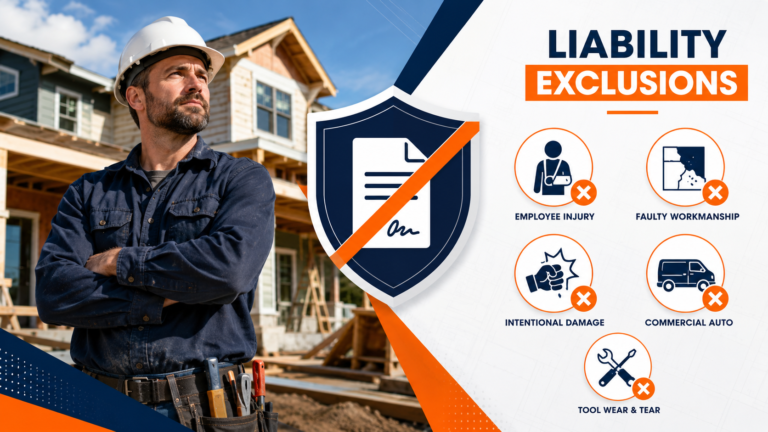
What Does Completed Operations Insurance Not Cover?
Common exclusions or limitations may include:
The Cost of Redoing Defective Work
The contractor usually remains responsible for repairing or replacing poor workmanship.
Expected or Intentional Damage
Insurance generally does not cover damage the insured expected or deliberately caused.
Professional Design Errors
Claims involving architectural plans, engineering, consulting, inspections, or technical recommendations may require professional liability insurance.
Pollution and Contamination
Mold, asbestos, lead, chemicals, fuel, refrigerants, and other pollution-related losses may be excluded. The NAIC notes that pollution exclusions are standard in many commercial general liability policies unless coverage is specifically provided.
Contractual Performance Problems
General liability usually does not pay solely because the contractor:
- Finished late
- Exceeded the budget
- Failed to satisfy a guarantee
- Used unacceptable materials
- Abandoned the project
- Owes a refund or contractual penalty
Known Defects or Prior Claims
A contractor generally cannot purchase a new policy after discovering a defect and expect it to cover a known loss.
Damage Above the Policy Limit
Completed operations claims are subject to policy limits. The California Department of Insurance notes that CGL policies typically have a separate aggregate limit for products and completed operations claims.
Products-Completed Operations Aggregate Limit
The products-completed operations aggregate is the maximum amount the insurer will pay for covered completed operations claims during the policy period.
For example, a policy may contain:
- A per-occurrence limit applying to one covered incident
- A general aggregate limit
- A separate products-completed operations aggregate
Multiple claims can reduce the remaining aggregate. A contractor with several completed projects could exhaust the limit before the end of the policy period.
Larger contractors may need commercial umbrella or excess liability coverage to provide additional limits above the general liability policy. Umbrella coverage does not fix every exclusion, but it may provide more protection when a covered claim exceeds the underlying limit.
How Contractors Can Protect Completed Work
Contractors should take several steps before and after every project.
Confirm That Coverage Is Included
Do not assume every low-cost liability policy includes adequate completed operations coverage. Review the declarations, coverage form, exclusions, and endorsements.
Maintain Continuous Insurance
Avoid gaps between policy periods, especially when past work could still cause injury or property damage.
Describe Operations Accurately
Tell the insurer about every service performed. Coverage may be disputed if the contractor is insured for painting but also performs undisclosed roofing or structural work.
Keep Project Records
Retain:
- Signed contracts
- Change orders
- Project photographs
- Inspection reports
- Material specifications
- Subcontractor agreements
- Certificates of insurance
- Completion documents
- Customer communications
Report Problems Promptly
Notify the insurer when an incident may lead to a claim. Do not wait until the customer files a lawsuit.
Frequently Asked Questions
Does contractor insurance cover damage after a job is finished?
It may. Products-completed operations coverage can apply when finished work later causes covered bodily injury or property damage.
Does completed operations coverage pay to redo bad work?
Usually not. It generally covers resulting injury or property damage rather than the basic cost of correcting the contractor’s defective work.
Is completed operations coverage included in general liability insurance?
It is commonly included, but policies and endorsements vary. Contractors should verify the coverage and its limits.
Does completed operations coverage protect subcontractor work?
Possibly. Coverage depends on the policy language, subcontractor exclusions, endorsements, contracts, and whether insurance requirements were followed.
Can a customer file a claim years after completion?
Potentially. Deadlines depend on state law, the timing of the injury or damage, and the policy. Contractors should maintain records and discuss long-term exposure with an insurance professional.
Does completed operations coverage expire when the project warranty ends?
Not necessarily. A workmanship warranty and liability insurance are separate. Coverage depends on the policy period, when the injury or damage occurred, and the policy terms.
Is a certificate of insurance proof of completed operations coverage?
A certificate summarizes coverage but does not replace the policy. Contractors and project owners may need to review endorsements and policy limits.
Does an LLC protect a contractor from completed-work claims?
An LLC does not replace insurance. The business can still face lawsuits, legal expenses, settlements, and judgments arising from completed projects.
Conclusion
Contractor insurance can cover completed work when a finished project later causes covered bodily injury or property damage. This protection is generally provided through the products-completed operations section of a commercial general liability policy.
However, it is not a workmanship warranty. The policy may cover water damage caused by a faulty pipe connection while excluding the cost of replacing the connection itself. It may cover an injury caused by a failed railing while excluding the cost of rebuilding defective work.
Contractors should verify completed operations coverage before beginning a project, review subcontractor requirements, understand the “your work” exclusion, and maintain continuous insurance after jobs are finished.
The best time to evaluate this protection is before a claim occurs. Review the full policy with a licensed insurance professional and confirm that the coverage reflects the contractor’s actual services, project sizes, and long-term completed-work exposure.
Editorial review: This guide was researched and reviewed by the Coverage Editorial Team using government agencies, insurance regulators, licensing authorities, policy documentation, and current industry pricing sources.