
Does Contractor Insurance Cover Damage to a Customer’s Home?
Contractor insurance can cover accidental damage to a customer’s home, but the answer depends on what was damaged, how the damage occurred, when it happened, and which policy the contractor carries.
General liability insurance may cover damage to a homeowner’s property when the contractor is legally responsible for an accidental incident. For example, coverage may apply if a plumber causes water damage to flooring, a painter spills paint on a customer’s furniture, or an HVAC technician damages a wall while moving equipment.
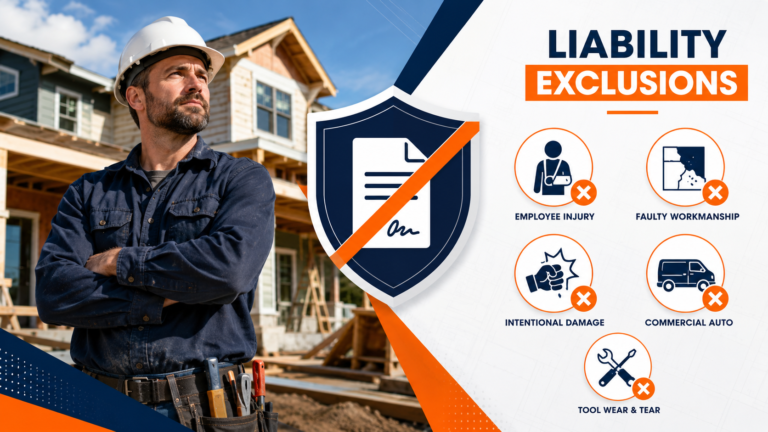
However, contractor insurance does not automatically cover every mistake. The policy may exclude the cost of repairing defective workmanship, damage to the specific part of the home being worked on, intentional damage, professional design errors, pollution-related losses, or damage that exceeds the policy limits.
The distinction between covered property damage and the cost of correcting poor work is especially important for contractors and homeowners.
When Does Contractor Insurance Cover Home Damage?
A contractor’s commercial general liability policy may cover physical damage to a customer’s home when:
- The damage was accidental.
- The contractor or an insured worker caused the damage.
- The incident occurred during the policy period.
- The damaged property belongs to someone else.
- The contractor is legally responsible.
- The type of work was disclosed to the insurer.
- No policy exclusion applies.
- The claim falls within the available limits.
The U.S. Small Business Administration identifies property damage as one of the main losses addressed by general liability insurance. Coverage may also include legal defense expenses, settlements, and judgments arising from covered claims.
A commercial general liability policy is intended to protect a business when its operations, services, or employees cause covered property damage or bodily injury to another party.
Common Examples of Covered Damage
The following situations may be covered by contractor general liability insurance, depending on the policy.
Water Damage Caused by Plumbing Work
A plumber replaces a pipe connection but accidentally damages a nearby supply line. Water spreads into the adjoining room and damages the homeowner’s flooring, drywall, and furniture.
The policy may cover the resulting damage to the surrounding property. However, the cost of replacing the contractor’s faulty connection itself may be excluded.
Damage Caused While Moving Equipment
An HVAC contractor moves a heavy air-conditioning component through the customer’s home and accidentally damages a doorway, wall, and hardwood floor.
Because the damage was accidental and involved property other than the HVAC system being serviced, general liability insurance may respond.
Paint Damage to Furniture or Flooring
A painter spills paint on a customer’s carpeting or furniture after a container is knocked over.
The resulting cleaning or replacement costs may qualify as third-party property damage, subject to the deductible, policy limits, and exclusions.
Fire Caused by Contracting Operations
An electrician or roofing contractor performs hot work that accidentally starts a fire. The fire damages several rooms and destroys personal belongings.
A general liability policy may cover the contractor’s legal responsibility for the resulting property damage. The insurer would investigate the cause, the contractor’s work classification, and whether any specific exclusion applies.
Broken Windows or Exterior Damage
A landscaper launches debris through a window while operating a mower, or a contractor damages siding while positioning a ladder.
These are typical examples of accidental property damage that may fall within general liability coverage.
Damage During the Job vs. Damage After Completion
When the property damage occurs can affect which section of the contractor’s policy applies.
Damage During Ongoing Operations
Ongoing operations coverage applies to qualifying incidents that occur while the contractor is still performing the job.
Examples include:
- A contractor drops equipment and damages flooring.
- A plumber causes an active leak during a repair.
- A carpenter accidentally damages hidden electrical wiring.
- A painter spills a coating on customer property.
- A worker breaks a window while carrying materials.
Coverage may be more complicated when the damage affects the exact part of the home on which the contractor was working.
For instance, if a contractor is refinishing a hardwood floor and damages that same floor, a property-being-worked-on exclusion may apply. If the contractor also damages furniture or walls elsewhere in the room, those additional losses may be treated differently.
Damage After the Job Is Finished
Products-completed operations coverage may apply when completed work later causes bodily injury or property damage.
For insurance purposes, property damage from completed operations generally involves physical damage to tangible property or the loss of use of that property.
Examples include:
- An improperly installed pipe later leaks and damages several rooms.
- Faulty electrical work allegedly causes a fire weeks later.
- A mounted cabinet falls and damages the countertop.
- A repaired railing fails and causes property damage.
- Roofing work allows rainwater to damage insulation and drywall.
Contractors should confirm that completed operations coverage is included and that it remains active after each job ends.
Canceling a policy after completing a project may create coverage problems for claims reported later, depending on when the damage occurred and how the policy is written.
Does Insurance Cover Faulty Workmanship?
General liability insurance is not designed to function as a contractor warranty.
It usually does not pay merely because the work:
- Looks unattractive
- Does not meet the customer’s expectations
- Must be completed again
- Was installed incorrectly
- Uses the wrong materials
- Fails to meet contract specifications
- Costs more to correct than expected
The policy may distinguish between the defective work itself and resulting damage to other property.
Example: Faulty Plumbing Installation
A contractor improperly installs a connection under a sink.
The cost of removing and reinstalling that connection may not be covered. If the connection later leaks and damages the cabinets, flooring, and room below, the resulting damage may potentially be covered.
Example: Defective Roof Installation
A roofer installs part of a roof incorrectly.
Replacing the defective roofing work may be considered the contractor’s business responsibility rather than covered property damage. If water subsequently damages ceilings, walls, insulation, or furniture, coverage may be available for that resulting damage.
The final decision depends on policy language, applicable state law, endorsements, the contractor’s scope of work, and the facts of the claim.
Damage to the Specific Area Being Worked On
General liability policies may restrict coverage for damage to the particular part of real property on which the contractor is directly performing operations.
This issue can arise when:
- A flooring contractor damages the floor being refinished.
- A roofer damages the roofing section under active repair.
- A cabinet installer damages the cabinet being installed.
- A plumber damages the fixture being serviced.
- A painter damages the wall being painted.
The exclusion may not necessarily apply to the entire home. Damage to other areas or unrelated property could be evaluated separately.
For example, the policy may exclude damage to the pipe being repaired but potentially cover water damage to the customer’s flooring and furniture. Because these distinctions are highly fact-specific, contractors should not promise a homeowner that insurance will definitely pay before the insurer completes its investigation.
Care, Custody, or Control Exclusions
Coverage can also become complicated when the contractor has possession or control of the damaged property.
Commercial general liability policies may limit coverage for personal property in the contractor’s care, custody, or control.
This could affect claims involving:
- Furniture moved and stored by a remodeling contractor
- Appliances taken to a workshop for repair
- Customer-owned equipment held by the contractor
- Keys, access devices, or other items temporarily entrusted to the business
- Personal property removed from a room during construction
Contractors who regularly take possession of customer property may need specialized coverage, such as an inland marine policy or another endorsement designed for property in their control.
Does Insurance Cover Damage Caused by Subcontractors?
It may, but subcontractor coverage should never be assumed.
Some general contractors’ policies cover certain liability arising from subcontracted work. Other policies contain restrictions, exclusions, or strict insurance requirements for subcontractors.
A general contractor may be required to:
- Use written subcontractor agreements.
- Request certificates of insurance.
- Verify subcontractor general liability coverage.
- Require specific liability limits.
- Be named as an additional insured.
- Confirm completed operations coverage.
- Keep insurance documents for several years.
If a subcontractor damages a customer’s home, the claim may be submitted to the subcontractor’s insurer, the general contractor’s insurer, or both, depending on responsibility and contractual arrangements.
Hiring uninsured subcontractors can lead to claim disputes, premium adjustments, and greater financial exposure for the general contractor.
What Home Damage Is Usually Not Covered?
Contractor general liability insurance commonly excludes or limits several categories of loss.
Intentional Damage
Damage that the contractor expected or intended is generally excluded. Insurance is designed for accidental events, not deliberate destruction or dishonest conduct.
Damage to the Contractor’s Own Property
General liability does not ordinarily cover the contractor’s tools, equipment, materials, or vehicle.
Separate coverage may include:
- Commercial property insurance
- Tools and equipment insurance
- Inland marine insurance
- Commercial auto insurance
- Builder’s risk insurance
The Insurance Information Institute notes that contractors often need specialized protection for tools and equipment that move between locations and for work in progress at a customer’s property.
Professional Design or Consulting Errors
A claim based on plans, designs, inspections, engineering advice, or professional recommendations may require professional liability insurance.
For example, if a construction consultant recommends an unsuitable structural solution that causes a financial loss, general liability may not provide the appropriate coverage.
Pollution, Mold, Lead, or Asbestos
Standard general liability policies frequently exclude many pollution-related losses.
Contractors pollution liability insurance may be needed for damage or cleanup involving:
- Mold
- Asbestos
- Lead paint
- Chemical releases
- Fuel spills
- Refrigerants
- Contaminated soil
- Hazardous waste
The NAIC explains that environmental insurance addresses pollution losses that are typically excluded from general liability and property policies, including certain property damage and cleanup costs.
Contractual Performance Problems
General liability does not ordinarily cover a contractor simply because the business:
- Missed a deadline
- Abandoned the project
- Exceeded the budget
- Failed to satisfy a warranty
- Used unacceptable materials
- Must refund the customer
- Owes contractual penalties
Some resulting physical damage may qualify for coverage, but the contractor’s basic failure to perform the agreement is usually a contractual business risk.
Damage Above the Policy Limits
Even a covered loss may exceed the amount available under the policy.
Once the applicable occurrence or aggregate limit is exhausted, the contractor may be responsible for the remaining amount. Commercial umbrella or excess liability insurance may provide additional limits above qualifying underlying policies.
Will the Homeowner’s Insurance Pay First?
A homeowner may choose to report serious property damage to the homeowners insurance company, particularly when immediate repairs are necessary.
Whether the homeowners policy pays depends on:
- The cause of damage
- The homeowner’s coverage
- Applicable exclusions
- The deductible
- Whether the loss was sudden or gradual
- The insurer’s investigation
Payment by the homeowners insurer does not necessarily release the contractor from responsibility.
Through subrogation, an insurance company that pays its policyholder may acquire the right to pursue the party responsible for the damage.
The homeowners insurer may therefore seek reimbursement from the contractor or the contractor’s liability insurer.
Homeowners should keep photographs, invoices, damaged materials, contracts, messages, and repair estimates. Contractors should promptly report the incident to their own insurance company and avoid making unsupported promises about payment or coverage.
What Should a Contractor Do After Damaging a Home?
A contractor should respond quickly and professionally after an accident.
1. Prevent Additional Damage
Take reasonable emergency action to stop the loss from becoming worse. This might include shutting off water, disconnecting power, covering an exposed area, or contacting emergency services.
Do not attempt unsafe repairs or disturb evidence unnecessarily.
2. Document the Incident
Photograph or record:
- The damaged area
- The contractor’s work
- Surrounding property
- Equipment involved
- Conditions at the site
- Emergency mitigation performed
Write down when the incident occurred and who witnessed it.
3. Notify the Insurer
Report the incident promptly, even if the homeowner has not yet filed a lawsuit.
Late notice can make the investigation more difficult and may create coverage issues. Provide accurate facts without speculating about causes or admitting responsibility beyond what is known.
4. Preserve Records
Keep copies of:
- Customer contracts
- Change orders
- Invoices
- Project photographs
- Subcontractor agreements
- Certificates of insurance
- Product specifications
- Communications with the homeowner
5. Cooperate With the Investigation
The insurer may send an adjuster, request estimates, inspect damaged property, or interview the people involved.
Do not dispose of important materials or authorize major permanent repairs without first documenting the loss, unless immediate action is necessary to protect people or prevent further damage.
How Can Homeowners Verify Contractor Insurance?
Before work begins, a homeowner can request a certificate of insurance showing the contractor’s general liability coverage.
The certificate may list:
- Contractor’s legal business name
- Insurance company
- Policy number
- Effective and expiration dates
- Coverage limits
- Certificate holder
A certificate is evidence of coverage at the time it was issued, but it is not the complete policy and does not guarantee that a particular claim will be covered.
The SBA recommends checking that builders carry their own general contractor liability insurance and requesting proof that the policy covers accidental bodily injury or property damage.
For a large project, the homeowner may also want to verify:
- Workers’ compensation coverage
- Commercial auto insurance
- Completed operations protection
- Subcontractor insurance requirements
- Applicable licenses and bonds
The contractor’s business name on the contract should match the name shown on the insurance documents.
Frequently Asked Questions
Does contractor insurance cover accidental damage?
General liability insurance may cover accidental damage to property belonging to a customer or another third party. Coverage depends on the cause, policy terms, limits, and exclusions.
Does contractor insurance pay to redo bad work?
Usually not. General liability is not a workmanship warranty. It may cover resulting damage to other property, but it generally does not pay merely to remove and replace defective work.
Does contractor insurance cover water damage?
It may cover sudden water damage caused by negligent contracting work. Gradual leaks, mold, pollution exclusions, faulty workmanship, and damage to the specific part being repaired can affect coverage.
Does contractor insurance cover damage after the project ends?
Products-completed operations coverage may apply when completed work later causes qualifying bodily injury or property damage.
Does insurance cover damage caused by a subcontractor?
Possibly. Coverage depends on the general contractor’s policy, the subcontractor’s policy, contractual responsibilities, and any exclusions for subcontracted work.
Can a homeowner file a claim directly with the contractor’s insurer?
A homeowner may contact the insurer, but the insurer will still investigate liability and coverage. The existence of a policy does not guarantee immediate payment.
What happens if the contractor has no insurance?
The homeowner may seek payment directly from the contractor or pursue available legal remedies. The homeowner may also submit the damage to a homeowners insurer, subject to the policy and deductible.
Does an LLC protect a contractor from a property damage claim?
An LLC may provide certain legal protections, but it does not replace insurance or pay repair costs, legal fees, settlements, or judgments.
Conclusion
Contractor insurance can cover damage to a customer’s home when the loss is accidental, the contractor is legally responsible, and the claim falls within the general liability policy’s terms.
Common covered situations may include damage to flooring, walls, furniture, windows, or other parts of a home caused during contracting operations. Completed operations coverage may also apply when finished work later causes damage.
However, insurance may not pay to correct the contractor’s defective work itself. Exclusions may also apply to property being directly worked on, property under the contractor’s control, intentional acts, professional errors, pollution losses, and contractual performance disputes.
Contractors should review these limitations before beginning a job and report incidents promptly. Homeowners should verify insurance before work starts and keep detailed project records.
The most reliable way to determine whether a specific loss is covered is to review the complete policy and allow the insurance company to investigate the facts of the claim.
Editorial review: This guide was researched and reviewed by the Coverage Editorial Team using government agencies, insurance regulators, licensing authorities, policy documentation, and current industry pricing sources.