
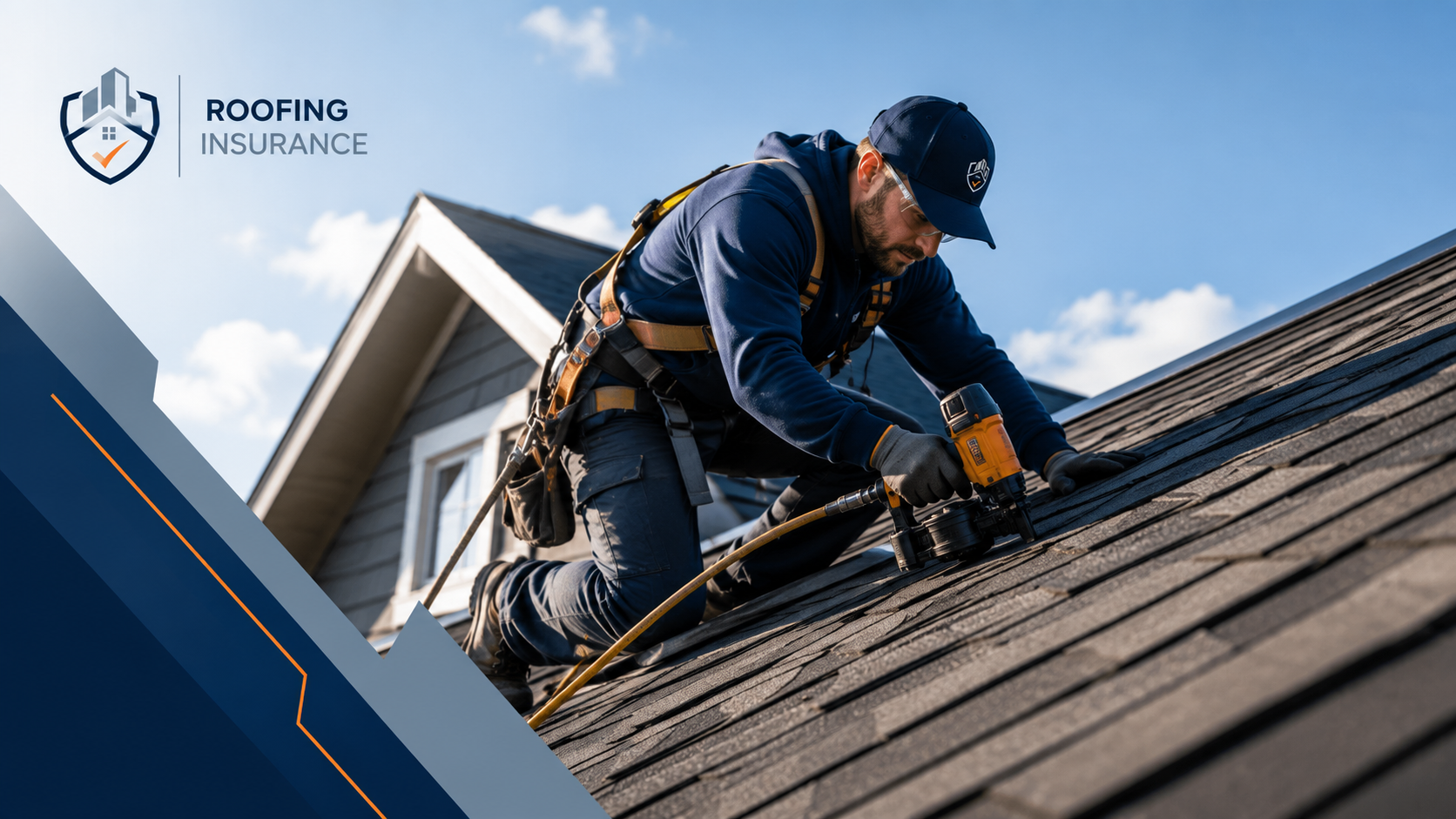
Roofing Contractor Insurance Cost and Coverage Requirements
Roofing contractors face some of the most severe risks in the construction industry. Employees work at height, carry heavy materials across sloped surfaces, operate nail guns and power tools, and remain exposed to changing weather conditions. A single fall can result in a catastrophic workers’ compensation claim, while improperly installed flashing or underlayment can cause extensive water damage months after a project is completed.
Roofing businesses also transport ladders, shingles, generators, compressors, and other equipment between jobsites. Storm restoration, commercial roofing, hot-applied systems, crane work, and subcontractor use can increase the company’s insurance exposure even further.
For most roofing businesses, the core insurance package includes general liability, completed operations, workers’ compensation, commercial auto, and tools and equipment coverage. Installation floaters, commercial umbrella insurance, pollution liability, and builder’s risk may also be necessary depending on the company’s projects.
How Much Does Roofing Contractor Insurance Cost?
Roofing is generally more expensive to insure than many other home-service trades because claims can involve serious falls, structural damage, water intrusion, and large completed-work losses.
Roofing and construction businesses purchasing coverage through Insureon pay the following average or median premiums:
| Insurance Policy | Average Monthly Cost | Average Annual Cost |
|---|---|---|
| General liability insurance | $267 | $3,200 |
| Business owner’s policy | $98 | $1,173 |
| Workers’ compensation | $254 | $3,054 |
| Commercial auto insurance | $173 | $2,075 |
| Tools and equipment insurance | $14 | $169 |
| Professional liability insurance | $74 | $886 |
| Commercial umbrella insurance | $81 | $977 |
| Surety bond premium | $8 | $100 |
These figures are pricing benchmarks rather than guaranteed quotes. The business owner’s policy, workers’ compensation, auto, tools, professional liability, umbrella, and bond figures shown on the roofing cost page may reflect broader construction-business data. A BOP already includes general liability, so those two premiums should not normally be added together.
NEXT reports that roofing insurance can begin at approximately $83.33 per month, although actual premiums depend on the work performed, location, workforce, and other underwriting factors. Its July 2026 data shows that 97% of roofing general liability customers pay an average of $133 per month, with most paying between $63 and $661.
Example Roofing Insurance Budgets
Using the Insureon averages, a solo roofer purchasing general liability, commercial auto, and tools coverage might budget approximately:
- General liability: $267 per month
- Commercial auto: $173 per month
- Tools and equipment: $14 per month
- Estimated total: $454 per month
A roofing company with employees purchasing general liability, workers’ compensation, commercial auto, and tools coverage might budget approximately:
- General liability: $267 per month
- Workers’ compensation: $254 per month
- Commercial auto: $173 per month
- Tools and equipment: $14 per month
- Estimated total: $708 per month
These examples do not include umbrella insurance, builder’s risk, installation coverage, pollution liability, higher contractual limits, additional vehicles, or project-specific endorsements.
What Determines Roofing Insurance Costs?
Two roofing companies performing similar work can receive very different quotes. Insurers evaluate the probability of a claim and the maximum financial loss the company’s operations could create.
Type of Roofing Work
Insurance costs may vary based on whether the contractor performs:
- Residential roof repairs
- Full roof replacements
- Commercial flat roofing
- Metal roofing
- Tile or slate installation
- Solar-related roofing work
- Roof coatings
- Hot-applied roofing
- Storm restoration
- Structural repairs
- Waterproofing
- Work above a specified height
Commercial roofing, high-rise projects, torch-applied systems, structural work, and operations involving cranes may be more difficult or expensive to insure than basic residential shingle installation.
Every operation should be disclosed to the insurer. A policy issued for residential asphalt-shingle work may not automatically cover commercial membranes, hot work, solar installations, or structural repairs.
Payroll and Number of Employees
Workers’ compensation premiums are strongly affected by payroll, employee duties, state rates, claims history, and classification codes. Roofing employees generally belong to higher-risk classifications than office or sales workers.
Accurate payroll records are important when a company employs both field roofers and clerical staff. Applying the wrong classification can cause overpayment or a substantial additional premium after an audit.
Annual Revenue and Project Size
General liability insurers may use annual revenue as a measure of business activity. Higher revenue generally indicates more projects and greater exposure to customer injuries, property damage, and completed-work claims.
The value and type of individual projects can also matter. Replacing a roof on a single-family home presents a different loss potential from reroofing an apartment complex, hospital, school, or industrial facility.
Claims History
Previous falls, water-damage claims, vehicle accidents, equipment theft, and lawsuits can increase premiums. Multiple claims may also reduce the number of insurers willing to cover the business.
Subcontractor Use
Subcontractors can affect general liability and workers’ compensation premiums. Insurers may request certificates of insurance, contracts, payment records, and proof that each subcontractor maintains appropriate coverage.
Payments to uninsured subcontractors may be added to the contractor’s exposure during an insurance audit.
General Liability Insurance for Roofers
General liability insurance may cover certain third-party bodily injury, property damage, personal injury, advertising injury, and legal defense expenses.
Common roofing liability claims include:
- A falling tool damages a customer’s vehicle.
- Roofing materials damage landscaping.
- A homeowner trips over equipment or debris.
- A ladder falls and breaks a window.
- A tarp fails and rain enters the building.
- Debris damages neighboring property.
- A worker accidentally damages siding or gutters.
- Roofing activities cause separate interior water damage.
- A customer alleges that the contractor caused bodily injury.
Roofing businesses purchasing general liability through Insureon pay an average of $267 per month. The reported average policy has a $1 million per-occurrence limit, a $2 million aggregate limit, and a $1,000 deductible.
Does General Liability Cover Faulty Roofing Work?
General liability insurance generally does not pay simply because a roof was installed incorrectly and must be removed or repaired.
However, it may cover separate resulting damage.
For example, replacing defective flashing may be considered part of correcting the roofer’s own work. Damage to ceilings, insulation, flooring, and customer property caused by water entering through that flashing may qualify as resulting property damage, subject to policy terms and exclusions.
Completed Operations Coverage
Roofing claims frequently appear after the contractor has finished the project.
Examples include:
- A roof begins leaking during the next storm.
- Improper flashing causes interior water damage.
- Roofing materials detach and damage nearby property.
- A poorly secured component injures someone below.
- An installation damages the building’s ventilation system.
- Water trapped beneath the roofing system causes separate structural damage.
Products-completed operations coverage is generally included within commercial general liability insurance. Roofing contractors should confirm that it applies to every system they install and remains available for the period required by customer contracts.
The contractor should also verify whether the policy contains roofing-specific exclusions, height restrictions, residential exclusions, open-roof limitations, or restrictions on subcontracted work.
Workers’ Compensation Insurance for Roofing Contractors
Workers’ compensation may pay medical expenses, partial lost wages, disability benefits, rehabilitation expenses, and death benefits following a covered employee injury or occupational illness.
Roofing employees face hazards involving:
- Falls from roof edges
- Falls through skylights
- Ladder accidents
- Heat illness
- Nail gun injuries
- Cuts and puncture wounds
- Electrical contact
- Falling materials
- Heavy lifting
- Vehicle accidents
OSHA identifies falls as a leading cause of injuries and deaths among roofers. Employers generally must provide fall protection when employees are exposed to falls of six feet or more to a lower level, and workers exposed to fall hazards must receive appropriate training.
Workers’ compensation requirements for private-sector businesses are primarily determined by individual states. Employee thresholds, owner exemptions, benefits, and penalties therefore vary by jurisdiction.
A solo roofing contractor should not assume that workers’ compensation is optional. Some licensing systems impose roofing-specific requirements even when the contractor has no employees.
Commercial Auto Insurance
Roofing companies use pickup trucks, vans, dump trucks, trailers, and other vehicles to transport employees, ladders, shingles, fasteners, generators, compressors, and debris.
Commercial auto insurance may include:
- Bodily injury liability
- Property damage liability
- Collision coverage
- Comprehensive coverage
- Medical payments or personal injury protection
- Uninsured or underinsured motorist coverage
- Trailer coverage
- Coverage for permanently installed equipment
Roofing and construction businesses purchasing commercial auto insurance through Insureon pay an average of $173 per month. Actual pricing depends on the vehicles, drivers, mileage, limits, claims history, and optional coverages.
Roofing businesses should specifically review coverage for trailers, exterior ladder racks, permanently installed toolboxes, and equipment transported in open truck beds.
Tools and Equipment Insurance
Roofers may carry valuable equipment, including:
- Nail guns
- Air compressors
- Generators
- Ladders
- Safety harnesses
- Roofing cutters
- Moisture meters
- Power tools
- Shingle removers
- Hoists
- Tablets and estimating equipment
Tools and equipment insurance, often written as inland marine coverage, may protect portable property while it is transported, stored off-site, or used at a jobsite.
Insureon reports an average cost of $14 per month for construction tools and equipment coverage. Items valued above $2,500 may need to be scheduled separately. NEXT reports that 45% of its roofing customers pay an average of $30 per month for tools and equipment coverage.
Review unattended-vehicle exclusions, overnight storage requirements, deductibles, per-item limits, and rented-equipment coverage.
Additional Insurance a Roofing Contractor May Need
Installation Floater
An installation floater may protect shingles, membranes, metal panels, insulation, flashing, and other materials while they are transported, stored at the project, or awaiting installation.
Builder’s Risk Insurance
Builder’s risk may protect a building under construction or major renovation, including certain materials and completed work. The property owner or general contractor may purchase the policy, but the roofing contractor should verify who is responsible before work begins.
Commercial Umbrella Insurance
Commercial umbrella insurance provides additional limits above qualifying general liability, commercial auto, and employer’s liability policies. It may be necessary for large commercial projects, multifamily properties, schools, government contracts, or customers requiring higher liability limits.
Contractors Pollution Liability
Pollution liability may be relevant when roofing operations involve solvents, coatings, adhesives, fuel spills, contaminated runoff, asbestos-containing materials, or environmental cleanup. Standard general liability policies may restrict pollution-related claims.
Professional Liability Insurance
Professional liability may be useful when the contractor provides roof inspections, specifications, consulting, drainage recommendations, engineering-related services, or written condition reports.
Roofing Insurance Requirements by State
There is no single nationwide insurance requirement for every roofing contractor. Rules may come from contractor licensing agencies, workers’ compensation laws, municipalities, motor vehicle laws, and customer contracts.
California
California C-39 roofing contractors must maintain workers’ compensation insurance or valid self-insurance even when they have no employees. They cannot use the standard no-employee exemption available to many other contractor classifications.
California licensed contractors must also maintain a $25,000 contractor license bond. Contractor LLCs are subject to additional bonding and liability insurance requirements.
Washington
Washington contractor registration requires a continuous surety bond of $30,000 for general contractors or $15,000 for specialty contractors.
Contractors must also maintain either:
- $200,000 in public liability and $50,000 in property damage coverage; or
- A $250,000 combined single liability limit
The contractor’s exact business name must appear on the bond, insurance certificate, and registration records.
Florida
Florida roofing contractors applying for active licensure must attest that they have obtained the liability and property damage insurance required by board rules. They must also obtain workers’ compensation insurance or qualify for an exemption.
Florida’s Construction Industry Licensing Board states that categories other than general and building contractors generally need at least $100,000 in liability insurance and $25,000 in property damage insurance, unless another amount is established by board rule.
These minimums may be far lower than the limits required by a customer or general contractor.
Contractual Coverage Requirements
A roofing contractor may comply with state licensing rules but still need higher limits to qualify for a project.
Contracts may require:
- $1 million per occurrence in general liability
- $2 million aggregate coverage
- Completed operations coverage
- Workers’ compensation
- Employer’s liability insurance
- Commercial auto insurance
- Commercial umbrella coverage
- Additional insured status
- Primary and noncontributory wording
- Waiver of subrogation
- Project-specific certificates
A certificate of insurance only summarizes existing coverage. It does not change the policy or create coverage that the policy does not provide.
How to Lower Roofing Insurance Costs
Roofing contractors may reduce insurance expenses by:
- Maintaining a written fall-protection program
- Training employees and documenting the training
- Inspecting harnesses, anchors, ladders, and safety equipment
- Hiring qualified drivers with clean records
- Reporting injuries and claims promptly
- Maintaining accurate payroll and revenue estimates
- Using correct workers’ compensation classifications
- Collecting certificates from subcontractors
- Securing tools, trailers, and vehicles
- Reviewing open claims and experience-modification data
- Comparing equivalent quotes from several insurers
- Increasing deductibles only when financially practical
The cheapest policy may exclude the operations most likely to create a claim. Before selecting coverage, review restrictions involving heights, open-roof exposure, subcontractors, hot work, commercial projects, storm restoration, completed operations, and specific roofing systems.
Frequently Asked Questions
How Much Is General Liability Insurance for a Roofer?
Roofing contractors purchasing general liability through Insureon pay an average of $267 per month. NEXT reports that 97% of its roofing general liability customers pay an average of $133 per month, with most paying between $63 and $661.
Does a Self-Employed Roofer Need Insurance?
A self-employed roofer should generally consider general liability, completed operations, commercial auto, and tools coverage. Workers’ compensation requirements depend on state law and licensing rules.
Does Roofing Insurance Cover Roof Leaks?
General liability or completed operations coverage may cover resulting interior property damage caused by a covered installation error. It generally does not pay only to replace the defective roofing work.
Is a Roofing Bond the Same as Insurance?
No. Insurance protects the roofing business against covered losses. A surety bond primarily protects the licensing authority, customer, or project owner. The contractor may have to reimburse the surety after a valid bond claim.
Do Roofing Subcontractors Need Their Own Insurance?
Roofing subcontractors should generally carry their own general liability, workers’ compensation, commercial auto, and tools coverage. The hiring contractor should obtain current certificates and review additional insured requirements before work begins.
Is $1 Million in General Liability Enough?
A $1 million per-occurrence and $2 million aggregate policy is common, but it may not satisfy every contract or provide enough protection for large commercial roofing projects.
Conclusion
Roofing contractor insurance may cost several hundred dollars per month for a solo residential roofer and substantially more for a company with employees, vehicles, subcontractors, and commercial projects.
Most roofing businesses should begin with general liability, completed operations, workers’ compensation, commercial auto, and tools and equipment coverage. Installation floaters, builder’s risk, pollution liability, professional liability, and commercial umbrella insurance may be necessary for larger or specialized projects.
Before purchasing a policy, verify every state, local, licensing, and contractual requirement that applies to the company. Provide the insurer with an accurate description of all roofing systems, maximum working heights, subcontractor use, payroll, vehicles, and equipment. A policy designed around the business’s actual operations is more valuable than inexpensive coverage that excludes its most significant risks.
Editorial review: This guide was researched and reviewed by the Coverage Editorial Team using government agencies, insurance regulators, licensing authorities, policy documentation, and current industry pricing sources.